
Claire Tabouret and Eva Jospin at the Grand Palais
Two Immersive Exhibitions at the Grand Palais
Right now at the Grand Palais, two artistic visions immerse you in two different settings. One is in Gallery 9 and the other in Gallery 10.2. Each exhibition invites visitors to discover the behind-the-scenes process of creating new stained glass windows for Notre-Dame Cathedral. In addition, you’ll see a universe born from inspiration drawn from caves, nature, and a legend at the origin of the Gothic style.
Claire Tabouret : The six bays for Notre Dame.
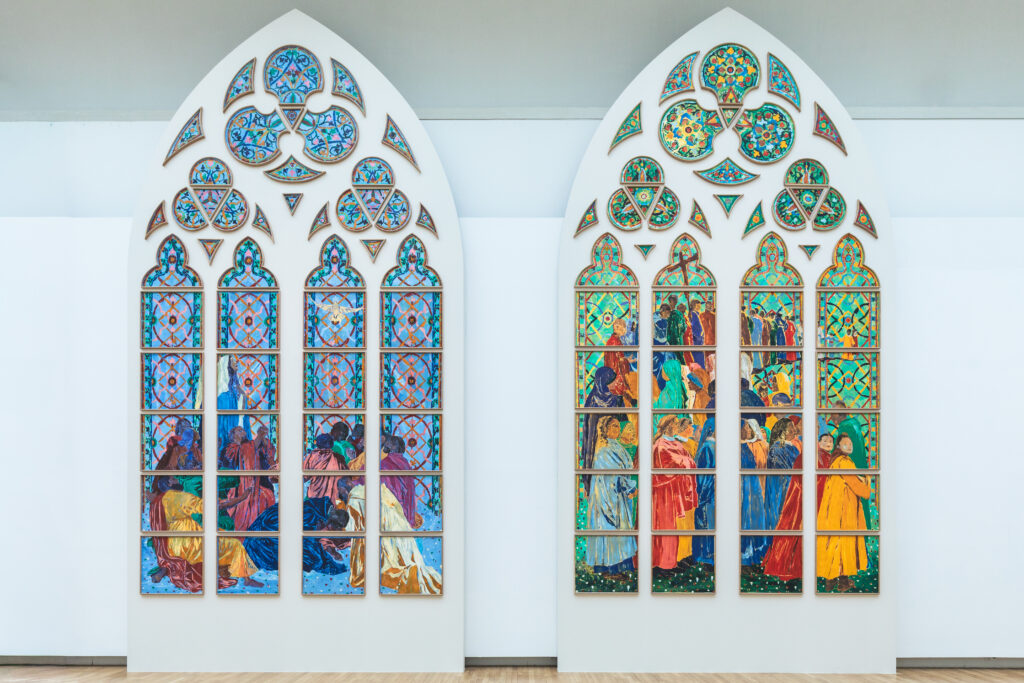
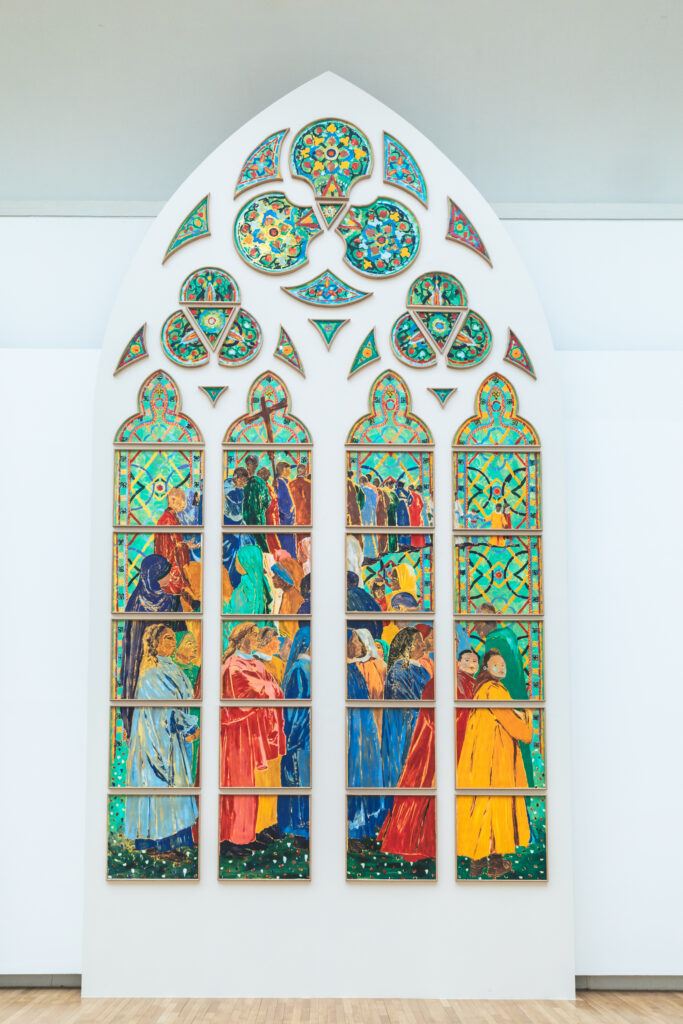
In this magnificent exhibition, Claire Tabouret reveals the creative process behind the design of the six bays she created for the reconstruction of Notre-Dame. A long creative process produced these life-size cartoons and sketches. Furthermore, they also bear witness to her masterful artisanal skills. These have been beautifully highlighted during this presentation at Paris’s famed Grand Palais.
The Grand Palais invites you to discover these stained glass windows, soon to be installed on the south side of the nave of Notre-Dame. Through this exhibition, Claire Tabouret takes us into the world of the art of glassmaking. This is a challenge for this young painter. Beforehand, this type of art was unknown to her. Therefore, her creative journey at the Grand Palais is all the more remarkable.
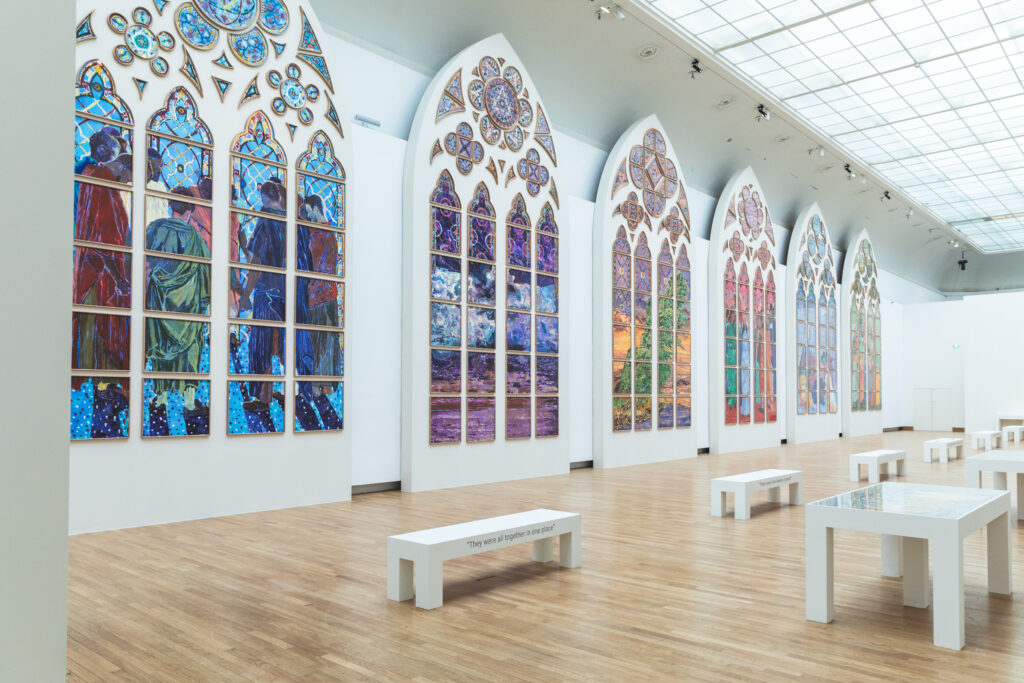
Claire Tabouret is a contemporary figurative painter who explores the themes of identity, childhood and collective memory through her works. Her human figures are often frontal and have intense gazes. In addition, she treats them with dense pictorial material and an expressive palette. These features have frequently graced exhibitions hosted by Grand Palais in recent years.
Altogether, these elements create a strong emotional tension. This is why the selection committee chose Claire Tabouret for this project. These powerful visuals perfectly capture the religious and historical aspects of Notre-Dame. For context, the Grand Palais has previously featured many such compelling displays within its illustrious halls.
“I was swept away by the beauty and poetry of the theme of Pentecost, chosen by the Archbishop of Paris. This idea of harmony, of people managing to unite and understand each other despite the diversity of their different languages, this crazy hope, I wanted to be part of it. We live in such a divided, chaotic, frightening world…”
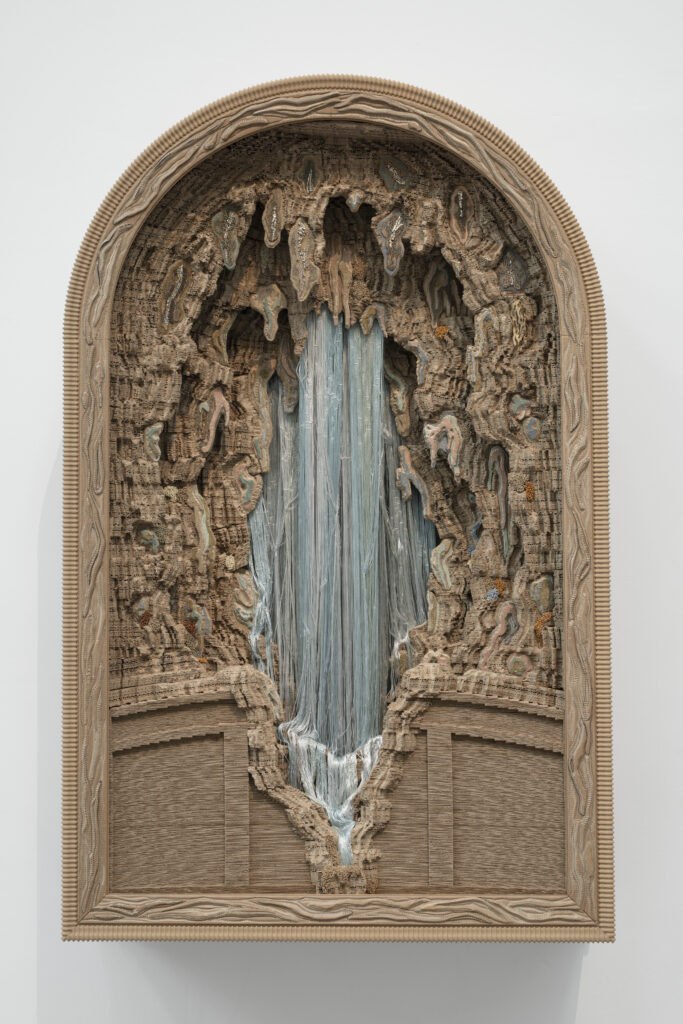
Eva Jospin : Grottesco a cardboard unvivers
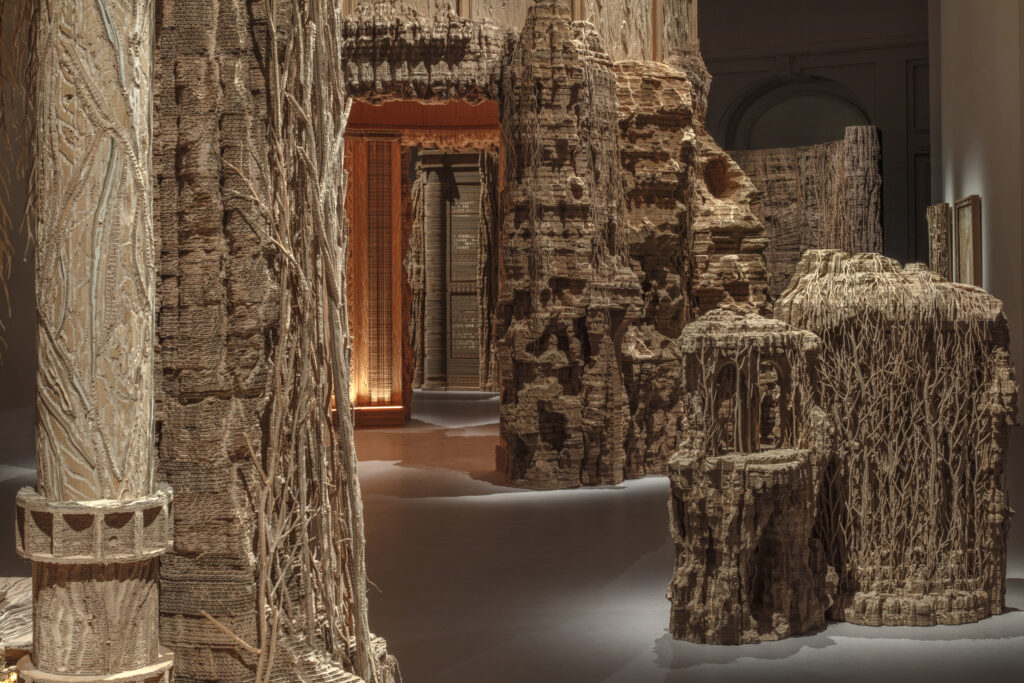
Visitors find magnificent cardboard sculptures in Gallery 9 of the Grand Palais created by the talented Eva Jospin. Her remarkable works add new dimension to the exhibitions within Grand Palais.
Over the years, her sculpted landscapes and imaginary architectures have given rise to a particularly unique collection of works on display at venues like the Grand Palais. Indeed, the title of the exhibition Grottesco, recalls a legend of a young Roman who accidentally fell into a forgotten hollow underground and found some beautiful mural paintings. Moreover, it was only much later that these remains were recognised as Nero’s Domus Aurea.
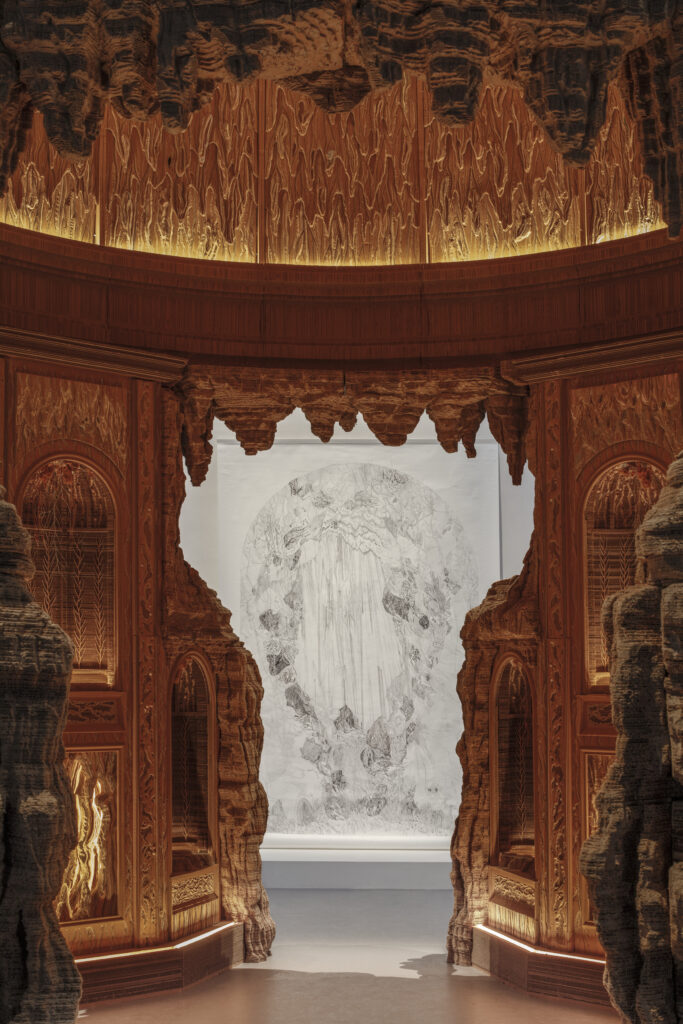
Inspired by this palace that resembled a cave, the ‘grotesque’ style was born. It is a style in which the organic, the structural and the fantastical blend together to create a rich imaginary universe. Additionally, exhibitions like this highlight the connection between architecture and art often seen at Paris’s Grand Palais.
Over the past decade, the concept of the cave has become a constant theme in her artworks. In fact, her sketches, installations and sculptures capture the idea of hidden cavities and hidden depths. They also display flourishing patterns and shapes, echoing the creative spirit celebrated at the Grand Palais.
The exhibition is particularly noteworthy and interesting because, not only does she use unusual materials for life-size sculptures, she also offers a new perspective on the underground world. In short, Eva Jospin’s presentation at Grand Palais provides visitors with a fascinating and breathtaking experience. It highlights the venue’s commitment to artistic innovation.
Partager cet article