

Institut du Monde Arabe Design Award 2025: Celebrating Arab Creativity
Agnese La Spisa
Celebrating Arab Creativity – Institut du Monde Arabe
The Institut du Monde Arabe (IMA) Design Award, now in its third edition, continues to champion the creativity of designers from the Arab world. Established in 2023, the award highlights both emerging and established talent. It celebrates the fusion of heritage, innovation, and craftsmanship. Through design, the IMA promotes Arab culture globally. It offers contemporary interpretations of traditional art and everyday life. In 2025, during Paris Design Week, the award returned as a platform. It allowed designers to present works that merge functionality, aesthetics, and cultural storytelling.
Award Categories
The Institut du Monde Arabe Design Award distinguishes projects across four carefully defined categories. Each highlights a different dimension of creativity and impact. The Emerging Talent Award recognizes students and designers with less than a decade of professional experience. It encourages fresh perspectives that respond to the specific challenges of Arab countries. The award also explores manufacturing processes and future development potential. The Contemporary Craftsmanship Award focuses on reimagining traditional practices, blending ancestral techniques with technological innovation. It addresses today’s issues of sustainability, personalization, and heritage preservation.
The Impact Award, supported by Arab Bank Switzerland, shines a light on projects that generate meaningful change. This includes education, the transmission of knowledge, and safeguarding of communities. It also highlights the creation of new economic opportunities rooted in low carbon materials and modernized traditions. Finally, the Grand Prix honors established architects and designers with over ten years of experience. It rewards concrete achievements, whether an object or interior architectural work. These reflect a career of excellence and creativity at the highest level.
Emerging Talent: Shaping the Future of Design
The Emerging Talent category brought together a remarkable group of designers. Their projects reveal both a sensitivity to heritage and a boldness for experimentation. Qatari designer Abdulrahman Al Muftah, with his poetic work Rain on Materiality, transformed painted copper sheets. This transformation reflected on how rain interacts with the billboards of Qatar’s urban landscape. It evokes the fragile balance between human construction and natural forces. Meanwhile, syrian designer Kenan Alkuwatly questioned the future of Levantine wood inlay with his SYNTH Collection. He merged ancestral craftsmanship with computational design to challenge tradition and technology.
In contrast, In Surface!, the architectural duo Bahraini–Danish created an adaptable system. This system of interlocking steel half-tubes shifts between screen, furniture, and shading structure. It responds fluidly to diverse spaces. Similarly, Civil Architecture from Kuwait presented Sun Path, an installation inspired by mosque sundials and historic observatories. It treats architecture as a sensory device attuned to celestial cycles. Tunisian designer Fares Dhifi, in Comme un Phare, reimagined stainless steel light sculptures as luminous guides. These sculptures blur the line between narrative art and functional object. Badih Ghanem, a Lebanese-French architect, offered Remember Love?, a series of reflective stainless-steel objects. These objects transform familiar Lebanese forms into vessels of memory and resilience.
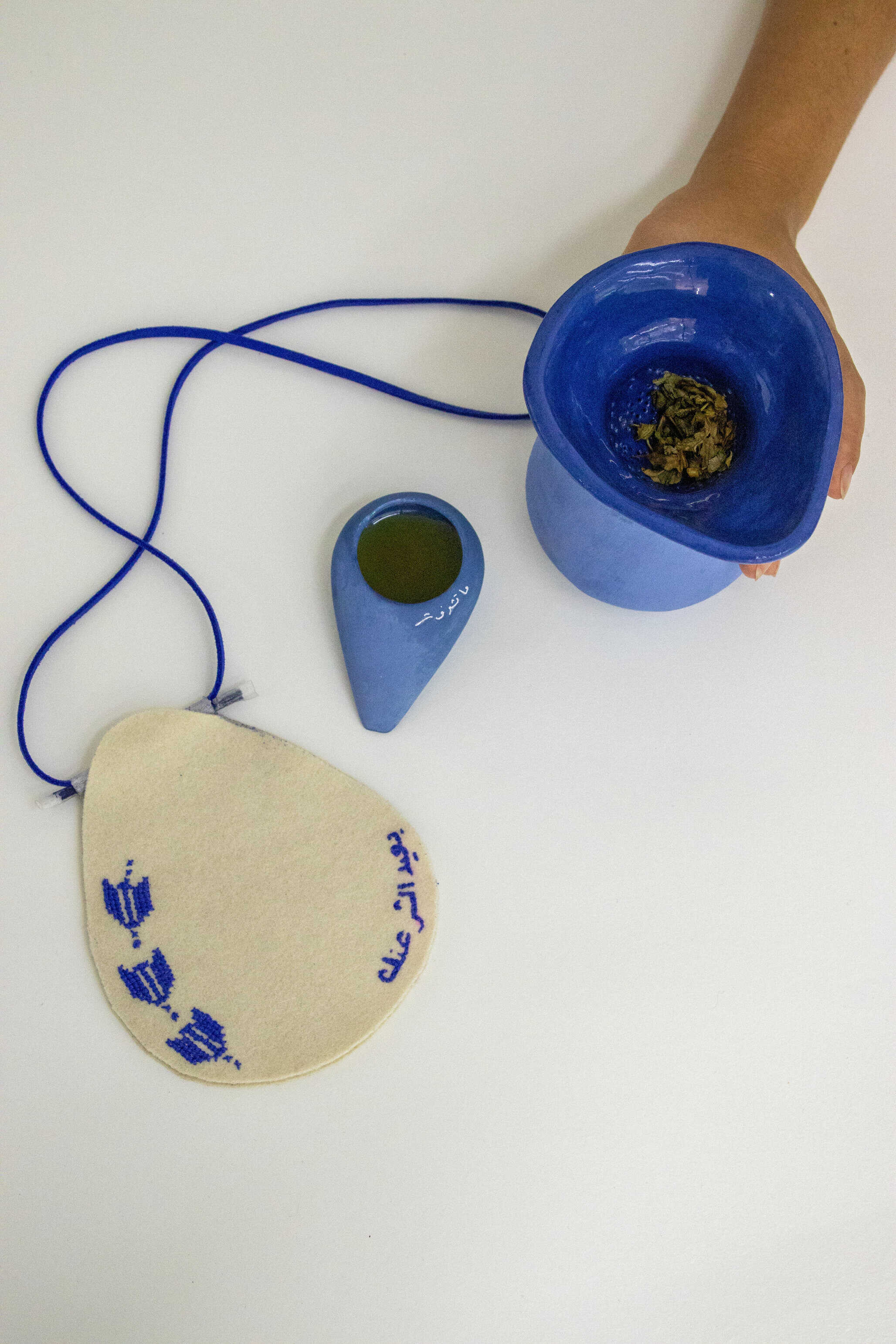
Further, palestinian designer Yasmine Tams, with her project Irth Siti, preserved endangered healing traditions. She translated folk remedies into narrative-driven objects, weaving cultural memory into contemporary design. Finally, Algerian Djaffar Zizi unveiled Dunes, folding screens and lighting pieces inspired by the dialogue between desert and ocean. Through wood and glass, he captured the poetry of shifting sand and water.


Contemporary Craftsmanship: Honoring Tradition Through Innovation
The nominees in the Contemporary Craftsmanship Award category demonstrate how traditional practices can be reinterpreted for today’s world while preserving cultural memory. From Morocco and France, Ateliers Zelij reinvents zellige with Froisser les Murs, transforming folded surfaces into poetic sculptural expressions. This bridges the visible and the invisible. Similarly, in Tunisia, Anissa Bedoui’s Origin(e) revisits artisanal memory through terracotta objects. These merge ecological responsibility with Mediterranean heritage. In addiction, BEIT Collective and Hamza Mekdad, based between Lebanon and France, presented The Essence of Home. Here, familiar domestic tools are reimagined as sculptural vessels of memory using Levantine craft techniques.
With TISSURA, Moroccan designer Izri Design explores the graphic potential of Arabic, Tifinagh, and Latin typography applied to ceramics. This turns everyday plates into cultural artifacts. Egyptian designer Shewekar Elgharably’s Juzur Armchair pays homage to palm trees. It blends bold veneer patterns with symbolic natural references. Meanwhile, Jordanian-British artist Julia Ibbini fuses computational geometry and handcraft in Kyma:vessel. This creates mesmerizing ornamental structures. Tunisian jeweler Sara Jomaa brings filigree to life in her Filigrane collection. She weaves silver threads into contemporary forms that honor past masters. Also from Tunisia, Dorra Khlass’s ceramic Blossom luminaires and Vibes tables reinterpret Arab-Islamic ornamentation through geometric harmony and symbolic design. In Kuwait, Studio Saffar’s Dual Domes highlight the fragile ecosystem of regional craft. They achieve this through an innovative double-casting method that unites disparate metals and workshops in collective production.
Finally, Moroccan-Canadian designer Yassine Touati, deeply influenced by Andalusian heritage, contributes with leather and jewelry creations. These bridge his cultural background with contemporary global aesthetics.


Tunisia

Impact Award: Social, Environmental, and Economic Change Through Design
The shortlisted candidates for the Impact Award exemplify how design can spark transformative social, environmental, and economic change. This also occurs across the Arab world and beyond. In Saudi Arabia, Bricklab addresses urban regeneration and adaptive reuse. They weave cultural, political, and community contexts into architecture and design interventions that reimagine public space. Lebanon’s Creative Space Beirut, a nonprofit school founded in 2011, removes financial barriers to fashion education. It empowers underserved youth while embedding sustainability, heritage, and social responsibility into their creative practices.
Meanwhile, Datecrete Studio & Lab, working across the MENA region, pioneers sustainable building materials with Datecrete. This is a cement alternative made from date pits, merging scientific innovation with regional identity to reduce environmental impact. At the same time, jordanian architect and artist Dina Haddadin reinterprets the Islamic Sabil with The Nomad Pavilion. It serves as a multifunctional oasis that collects water, offers shelter, and embodies sustainability, spirituality, and cultural continuity. Similarly, from Lebanon, Fabraca Studios revitalizes artisanal craftsmanship through contemporary lighting design. They transform Beirut’s economic challenges into opportunities for skilled makers and position craft as a global dialogue. In Bahrain and the U.S., Maraj’s OFFCUT/CUTOFF explores industrial offcuts as a material reservoir. They transform waste into valuable design resources through collective workshops that merge research, production, and community.
Finally, Jordan’s Twelve Degrees Design tackles the mounting crisis of textile waste with Lammeh. This is a modular and easily recyclable furniture piece that embodies circularity. It allows for simple disassembly and reuse. Together, these nominees reveal how design, when rooted in awareness and responsibility, becomes a tool not just for aesthetics, but for resilience, sustainability, and meaningful change.


Grand Prix: Redefining the Boundaries of Design and Architecture
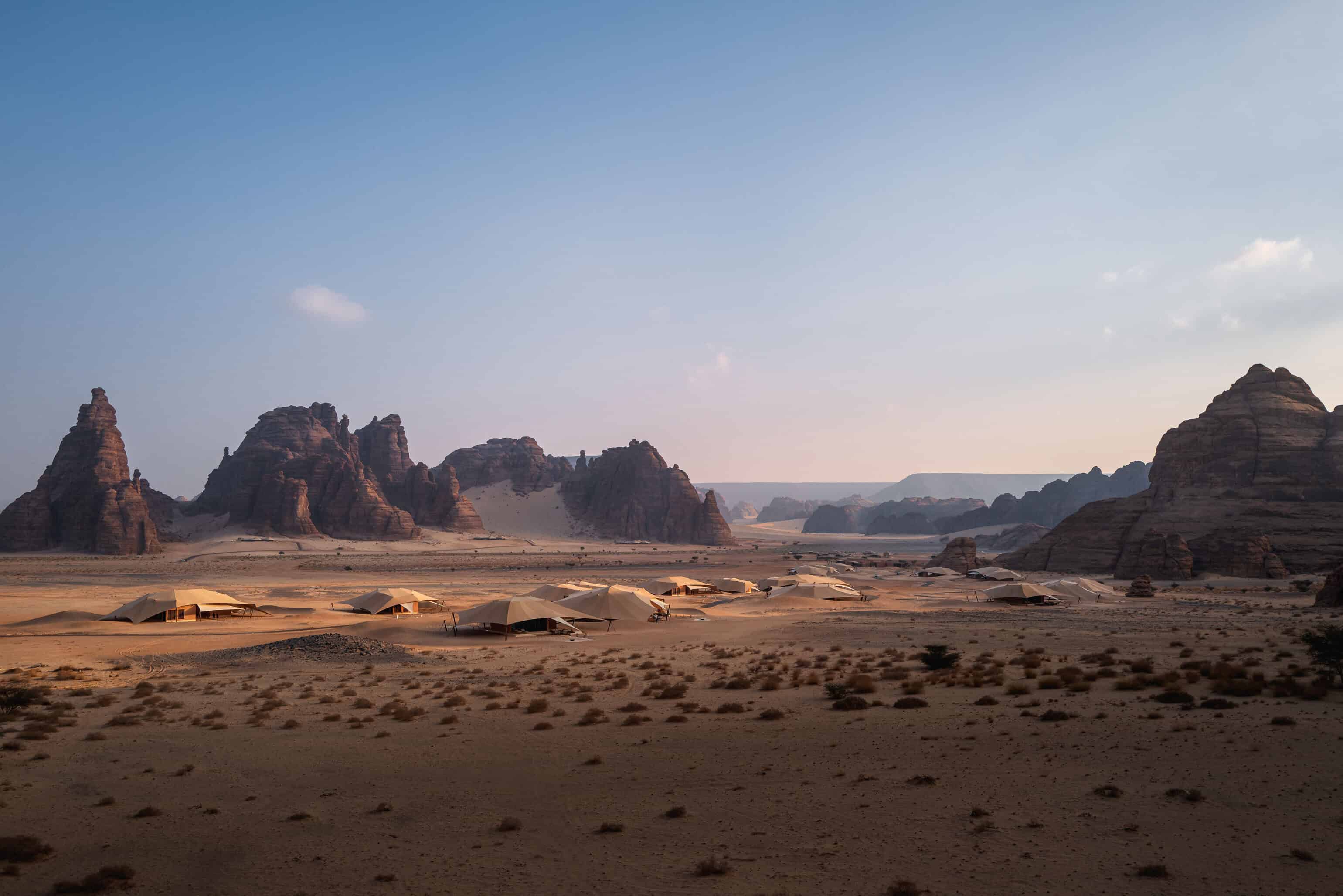
The nominees for the Grand Prix embody some of the most ambitious and visionary practices in design and architecture, uniting heritage, innovation, and cultural identity on a global scale. In the UAE, Aljoud Lootah Design Studio reinterprets tradition with The Falaj Collection, inspired by ancient irrigation systems, while France-based AW2 Architecture & Interiors dissolves architecture into the desert with Banyan Tree AlUla, echoing Saudi Arabia’s Vision 2030. From Libya, Loay Burwais’s Al Lamma fosters healing and creativity in post-conflict Tripoli, while Jordan’s Sahar Madanat champions sustainability through Made From Jordan, transforming local waste into furniture rooted in circular design.
Meanwhile, in Egypt and the UAE, MF & Associates merge narrative and space with Sachi Marassi, a dining experience shaped by the sea. Moroccan-French designer Moulay Hafid Sdikiene reflects on nomadism and memory with ÆRA NOMADICA, sculptural objects in pink sandstone that evoke ancient trade routes. Meanwhile, Lebanon contributes two voices: Studio Manda’s Ramla Collection, capturing the movement of sand through eco-composites, and Ala Tannir’s poetic curatorial project And from my heart I blow kisses to the sea and houses, preserving memory through the rehabilitation of a 1920s Beirut home. Finally, Dubai’s X Architects honor Emirati heritage with Bait Mohammed Bin Khalifa, a conservation project blending traditional materials with cutting-edge techniques to safeguard cultural history.
A Future Rooted in Heritage and Innovation
The Institut du Monde Arabe 2025 Design Awards reaffirm that the Arab world’s creative landscape is thriving at the crossroads of tradition and innovation. From preserving cultural memory to pioneering sustainable materials and reimagining spaces of community, this year’s nominees demonstrate how design can both honor the past and shape a more resilient, human-centered future. These projects are not only objects or spaces—they are living testaments to the power of creativity to heal, inspire, and transform societies.
Institute du Mode Arabe Website
Share this post

Agnese La Spisa is an Italian creative based in Italy, specializing in publishing and fashion communication. At IRK Magazine, she brings together creativity, research, and design to shape stories with clarity and style. Curious and collaborative, she is driven by a passion for exploring culture, aesthetics, and the narratives that connect people, ideas, and disciplines.
Read Next


