
NYCxDESIGN 2026
Patrick Duffy
Design Connects Us. New York Proves It at the NYCxDESIGN 2026
In a city that never stops redesigning itself, NYCxDESIGN 2026 returns with a quiet but urgent message: design is not just aesthetics. It is cultural authority.
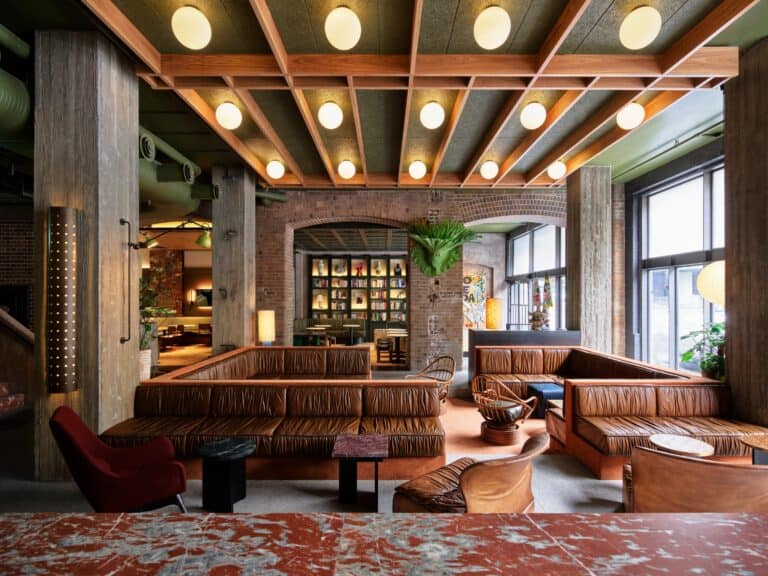
There is a persistent misunderstanding about design, particularly in cities that trade heavily on image. People think it is about taste. About things. About the chair, the lamp, the perfect hotel lobby that smells faintly of vetiver and ambition. That reading now feels naïve.
Design is not decoration. It is decision-making made visible. It determines how we move through space, how we encounter one another, how power is distributed, and how culture takes physical form. If fashion tells you who you are, design tells you where you stand.

That is why the 2026 edition of NYCxDESIGN Festival matters more than it might appear at first glance. Running May 14 through 20, the festival stretches across New York with a confidence that feels less like programming and more like a citywide thesis. This year, that thesis is framed as “Design Connects Us.” It is a polite phrase for something far more complex.
Connection is never neutral. In truth, it implies access, intention, and that someone, somewhere, has decided how and where those connections happen.
Ilene Shaw, the festival’s Executive Director, has been careful to position the week not as an industry gathering, but as something closer to a civic platform. “NYCxDESIGN is about more than showcasing great work,” she has said. “It’s about demonstrating how design shapes the way we live, work, and connect with each other.”

That distinction is everything.
Because when you step back, New York itself is the real exhibition. The festival simply turns up the volume. Every street, every building, every public space is already a negotiation between history, money, imagination, and control. In this case, NYCxDESIGN doesn’t invent that tension. It reveals it.
The opening night at Halo on Pine Street will no doubt be elegant, well-dressed, and socially efficient in the way New York excels at. But the real story begins the next morning, when design spills into the city and has to contend with reality.
Times Square, the Design Pavilion to NYCxDESIGN 2026
In Times Square, the Design Pavilion returns, placing design in one of the most aggressively commercial environments on earth. It is a fascinating contradiction. Design, often positioned as thoughtful and intentional, is forced to exist within a space defined by speed and spectacle. It either holds its own, or it disappears.

Seaport, the SHINE exhibition
At the Seaport, the SHINE exhibition gathers 70 designers around the idea of light. On paper, it is poetic. In practice, it becomes something more revealing. In a city like New York, it is not just an artistic exercise. It is a metaphor hiding in plain sight.
Shaw has spoken about this balance between public engagement and deeper meaning. “We want people to experience design where they already are,” she notes. “Not just in galleries or showrooms, but in the everyday spaces of the city.” It sounds simple, but it is not. It requires a belief that design belongs to everyone, not just those trained to speak its language.
That idea continues through the Salon Series, where firms like INC Architecture & Design, Rolls-Royce, and TenBerke open their studios for conversations that feel closer to intellectual salons than industry panels. There is something refreshingly analog about it. Rooms filled with people, exchanging ideas, disagreeing, refining. No algorithm in sight.

Future Now AI Summit at Cornell Tech
Then, of course, there is the Future Now AI Summit at Cornell Tech. If the salons represent design’s past and present, this is its anxiety about the future. With contributors from Adobe, Google DeepMind, IBM, and MIT Media Lab, the conversation turns to authorship, automation, and the increasingly blurred line between human intention and machine-generated output.
Let’s be honest. AI is not coming for design. It is already here. The real question is whether it flattens culture into a polished sameness or forces designers to become more precise, more opinionated, more human. Technology does not erase taste. It exposes where it never existed.
Shaw has acknowledged this tension directly. “Design is evolving alongside technology, but its core purpose remains human,” she has said. “The challenge is making sure innovation enhances that humanity rather than replacing it.”

An international presence
The festival’s international programming pushes this even further. From Italian design houses like B&B Italia and Poltrona Frau to French programming through Villa Albertine and voices from Mexico and across Asia, NYCxDESIGN positions itself as a global conversation rather than a local showcase.
That matters, because design has always been a form of cultural diplomacy. Materials travel. Ideas migrate. A chair designed in Milan appears in a hotel in New York, is photographed in Tokyo, and influences a designer in Mexico City. In short, the object is not the point. The exchange is.
And then there are the neighborhoods. SoHo, DUMBO, Harlem, Flatiron, Hudson Yards. Each one with its own rhythm, its own audience, its own interpretation of what design should be. This is where the festival becomes most honest. Because design does not land the same way everywhere. In one neighborhood, it reads as aspiration. In another, as community.
What feels increasingly important, and increasingly visible, is the city’s effort to ensure that design participates in public life more broadly. Therefore, initiatives like the Department of Transportation’s “Dwelling and Placemaking in Brownsville” tour reflect a growing commitment to inclusive development, community-led design, and investment that extends beyond traditional centers of influence.
This is where the conversation gets uncomfortable, and therefore interesting.

Design has consequences.
Design can elevate, exclude, create belonging, erase it, and it can turn a city into a playground or a battleground, sometimes simultaneously.
And yet, despite all of that, there is still optimism embedded in the structure of the 2026 NYCxDESIGN festival. The idea that bringing people together across disciplines, across geographies, across perspectives, might actually lead to something better.
Shaw returns to that idea often. “New York has always been a place where ideas collide,” she has said. “NYCxDESIGN creates a framework for those collisions to turn into meaningful dialogue.”
Collisions. Not conversations. It is a more accurate word.
Because good design is rarely polite. It challenges assumptions, forces decisions and demands clarity.
What NYCxDESIGN 2026 ultimately reveals is not just what designers are making. It reveals what we value, what we ignore, and what we are still trying to figure out.
The chair is never just a chair. The building is never just a building. The city is never just a city. Design is the argument underneath it all.
And this week in May, New York makes that argument out loud.
Share this post
Patrick Duffy is the founder of Global Fashion Exchange, a company catalyzing positive impact through strategic consulting roadmaps focusing on supply chain transparency, worker rights, responsible production for B2B as well as consumer facing programming and community building focusing on aligning people or communities with the SDGs.
Experience developing networks and activating ideas, guiding creative teams globally, and working with institutions like the Victoria and Albert Museum and UNESCO, and iconic spaces such as Federation Square Melbourne, Madison Square Garden, Bryant Park in New York City, and The Dolby Theatre in Los Angeles.
Patrick has produced clothing swaps all over the world from, with GFX Active in over 100 countries. Each GFX event focuses on building community, education and transformational business models. Partnering with global brands, key stakeholders, and academia to help create awareness and positive impact through conscious consumption
Patrick harnesses the power of media to create positive social and environmental impact. Through storytelling, education, and advocacy, he raises awareness, inspires action, to catalyze change. By highlighting issues and solutions, Patrick creates strategic campaigns to engage audiences, influence attitudes and behaviors, and contribute to a more sustainable and just world. Additionally, Patrick is the Sustainability and Positive Impact Director of Paris based @IRKMagazine and Editor In Chief of @IRKLiving
Patrick has produced and co-curated events and marketing/PR campaigns for recognized brands across art, fashion, and tech spaces including @virginhotels @britishfashioncouncil @mspdid @moethennessy @microsoft @lagosfashionweekofficial @perutradenyc @fashionimpactfund @istitutomarangonidubai @peaceboatus @lisboafashionweek and more spanning 15 years and hundreds of events in 5 continents.
Read Next