Coco Capitán: Imagination Investments, Hong Kong
Anji Connell
Timed to coincide with Art Basel Hong Kong. Globally recognised Coco Capitán presents Imagination Investments. A three-part city-spanning installation unfolding across Hong Kong as a meditation on memory, longing, and human connection.
Born in Seville and based in London, Coco Capitán has built a distinctive practice that moves fluidly between photography, text, and fashion. Her handwritten phrases—at once wry and quietly melancholic—becoming a signature language. Commissioned as part of Swire Properties Arts Month. The ArtisTree exhibition transforms urban space into an immersive narrative. Inviting visitors to consider how meaning is shaped through time, image, and encounter. Reflecting on the themes of memory, longing and connection. Offering an evocative dialogue between contemporary art and urban culture. Drifting through the city like a half-remembered thought, part exhibition, part feeling.
Capitán has emerged as one of the most influential artists of her generation. Traversing the worlds of art, photography and fashion. Internationally recognised for her analogue photography and distinctive voice, all her works famously incorporate elements of her idiosyncratic handwritten texts. These texts are often infused with an acute sense of humour tempered by melancholy. Which have received sustained critical attention over the past decade. Her work with leading institutions worldwide, in collaborations with some of the world’s most prominent fashion houses.
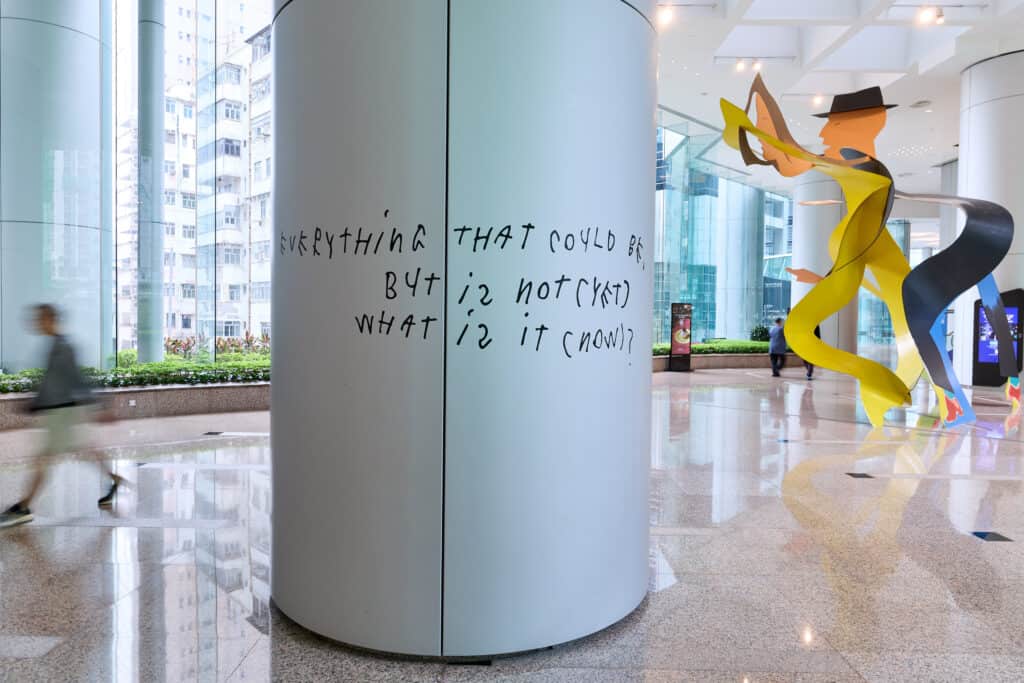
A Three-Part Dialogue Between Art, Time, and Place.
The journey begins at ArtisTree with “Naïvy,”continues through a text-based public art intervention, “I Read While I Walk,” and culminates on the top floor of One Island East with “Memory Adoption Bureau.”
Part 1: “Naïvy” dives into Coco Capitán’s love for the ocean, showcasing over 50 works that reflect themes of freedom and youthful nostalgia. Firstly, the sailor emerges as a symbol of autonomy, encouraging visitors to ponder belonging versus wandering. Secondly, guests receive a personal letter inviting them to become ‘lost memory collectors’ as they move to the next part.
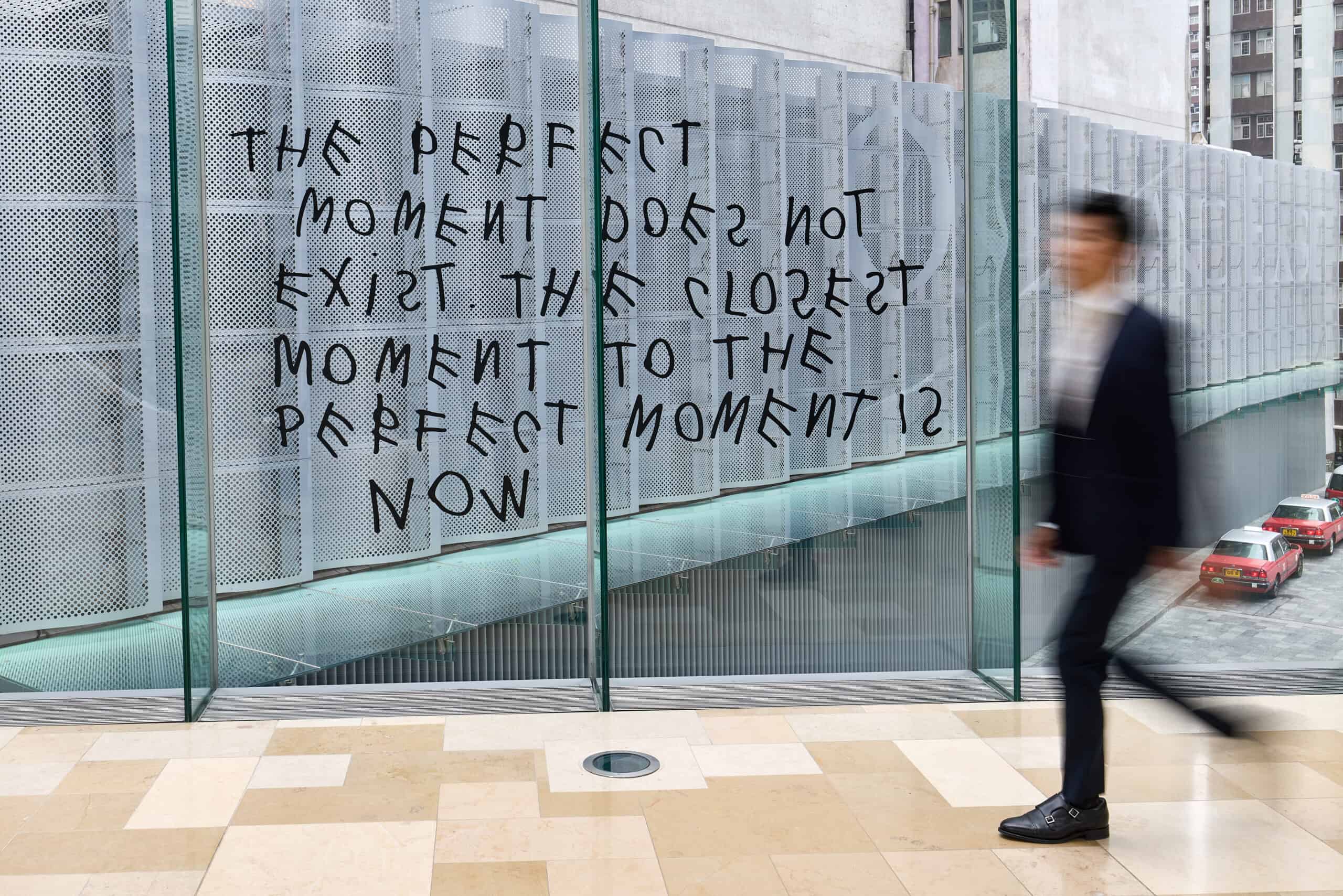
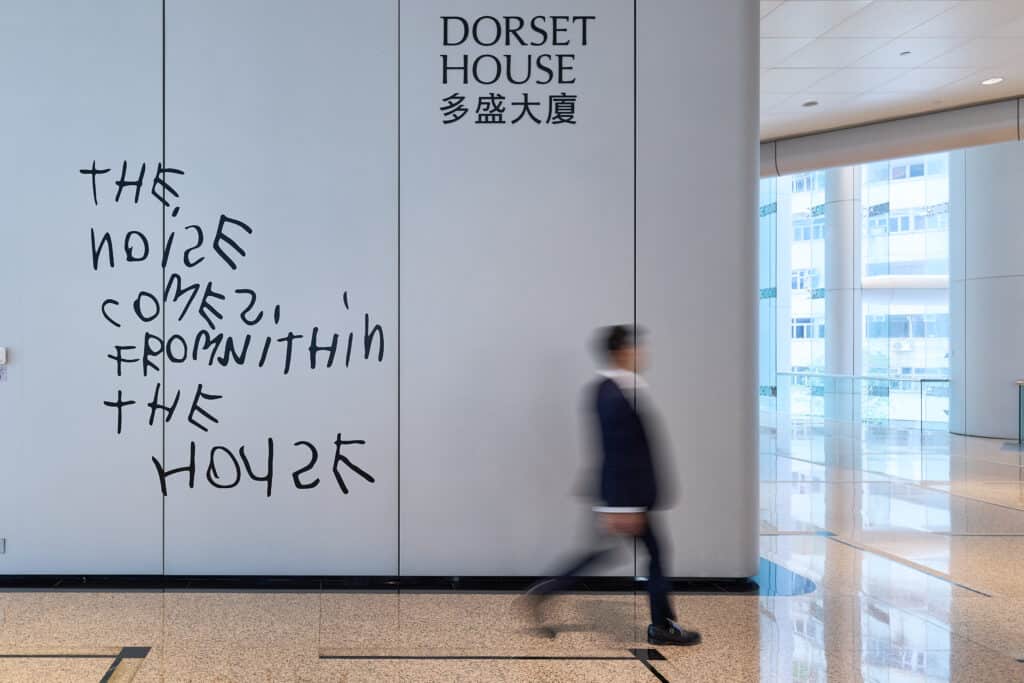
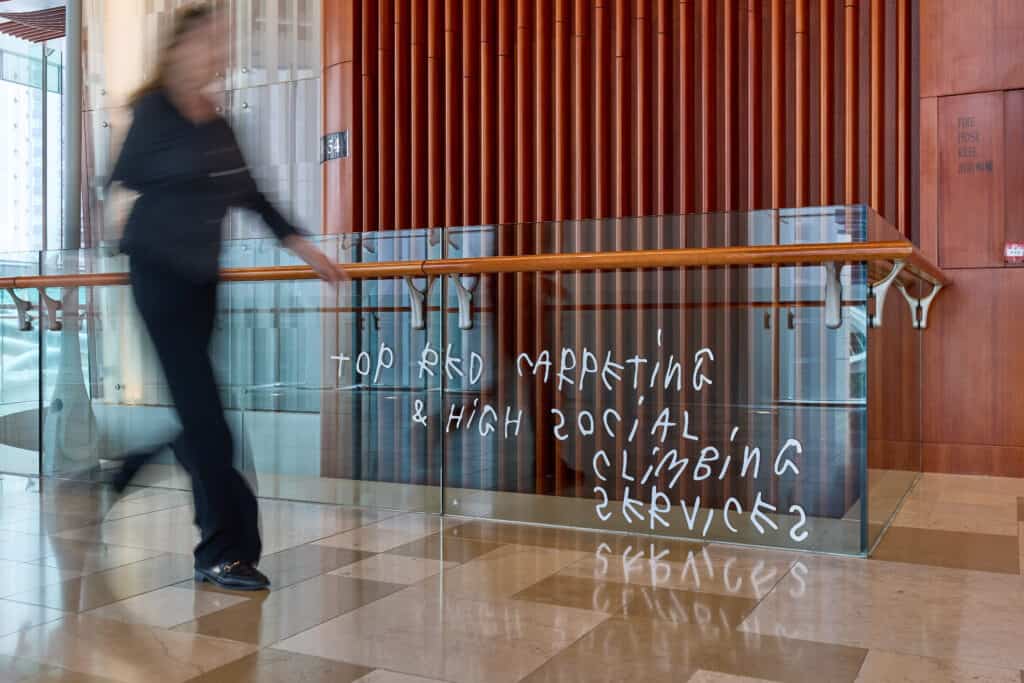
Part 2: “I Read While I Walk” connects the venues with a unique text installation nearly half a kilometer long at Taikoo Place. Featuring 13 of Capitán’s handwritten phrases and poems, it infuses her voice into the everyday pedestrian experience, reshaping how we perceive urban life.
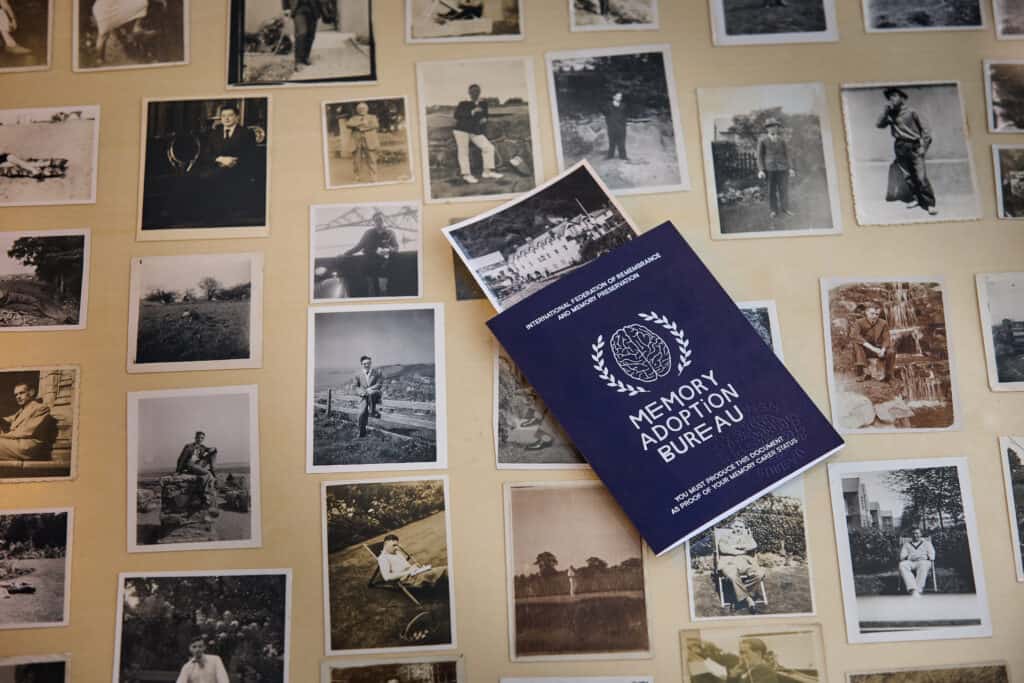
Part 3: “Memory Adoption Bureau”can be accessed with the invitation letter, transforming a 10,000 sq. ft space on the 67th floor of One Island East into an interactive hub. This installation invites visitors to become guardians of anonymous memories, choosing and adopting forgotten images, merging viewing with a hands-on journey of connection and remembrance.
About Coco Capitán:
Coco Capitán is the kind of artist who makes you pause mid-scroll, mid-thought, mid-sentence —and wonder why a few simple words feel like they’ve been pulled straight out of your own head.
Born in Spain in 1992 and based in London, she moves fluidly between photography, painting, and text, creating work that sits somewhere between diary entry and visual art. She first gained wider attention for her handwritten phrases—raw, questioning, often slightly off-kilter—scrawled across images, canvases, and public spaces. They don’t shout. They linger.
Capitán’s practice is rooted in writing. Her days begin with writing down reams of her thoughts, dreams, and fragments, most of which will never be seen, but all of which quietly feed into her work. From there, images emerge into photographs that feel candid but considered, often exploring youth culture, identity, and the tension between vulnerability and performance.
Royal College of Art
She studied photography at the Royal College of Art, where her approach began to expand beyond the camera. Painting and text became just as important as photography—ways to express what a photograph alone couldn’t quite hold: memory, imagination, the subconscious.
You may recognise her from her collaboration with Gucci, where her now-signature handwritten slogans appeared across campaigns and garments—phrases like “What are we going to do with all this future?” turning fashion into something more introspective, more human.
What makes Coco Capitán distinct isn’t just her aesthetic—it’s her tone. Her work feels personal without being confessional, poetic without trying too hard, playful but quietly existential. She asks questions instead of offering answers, creating space for you to see yourself in the work.
In a world obsessed with clarity and certainty, Coco’s art lives in the in-between—the half- formed thought, the fleeting feeling, the dream you can’t quite explain but can’t quite forget either.
Somewhere between a dream and a sentence, Coco Capitán is already awake.
Not fully—not in the practical sense. But awake in that way artists are: half inside their own minds, half drifting through the world, catching thoughts before they disappear. The coffee comes first. Then the pages. Four of them, every morning. No waiting for inspiration, no romantic pauses—just the quiet discipline of showing up.
At first, it’s nothing. Or it pretends to be. Scraps of thought, fragments of dreams, passing anxieties. Writing what may feel insignificant now, but in time, may become something.
Because before the photograph—before the image that feels both accidental and strangely precise—there’s a sentence. Writing isn’t a companion to her work; it’s the origin of it, it’s the place where her ideas loosen, stretch, and begin to take shape.
Lines surface, “Think harder.” Another follows, “How can you talk so much to say so little?” I had a backwards dream in which tall trees grew to become seeds.
They read like messages, but not quite. Coco writes in questions, in half-answers, in thoughts that hover just long enough to pull you in. There’s something flirtatious about it—an invitation rather than a declaration.
Dreams, she says, aren’t an afterthought for her; they’re material she returns to. Some of us tend to dismiss dreams, but Coco treats them like evidence—proof that the mind, when left alone, knows exactly how to be interesting. Reality, on the other hand, she says, can feel a little predictable.
Photography, by nature, leans toward what’s there. What can be seen, framed, captured. But Coco is rarely satisfied with that. She’s after something less stable—memory, fantasy, the way a feeling reshapes what you see. The image as it exists in the mind, not just in front of the lens.
So she writes it. And when writing isn’t enough, she paints it.
That shift—from notebook to canvas—arrived quietly during her time at the Royal College of Art, not as a rejection of photography, but as an expansion. A way to explore ideas without explanation, to let them exist without needing to resolve.
Painting gave her that freedom. It loosened the grip of reality, allowed her thoughts to move differently—more abstract, more instinctive, more alive. Less concerned with making sense, more interested in feeling—without having to look at reality.
And then there’s the handwriting.
Or rather, the refusal to correct it.
Dyslexic as a child, Coco learned to write letters backwards, words slightly off, in ways it wasn’t supposed to, school however, tried to straighten it out, to make it legible, ‘proper.’ For a while, she followed the rules.
Then she stopped.
She returned to that earlier way of writing, not as nostalgia, but as instinct. Letters stretch, lean, blur into each other. They feel immediate, unpolished, strangely intimate. You don’t just read them—you encounter them. They ask you to slow down, to look twice, to meet them halfway.
It’s disarming. And that’s the point.
Because Coco Capitán isn’t interested in telling you what something means. She’s far more interested in what it might feel like. Her work doesn’t arrive fully formed; it lingers, it questions, it invites.
Somewhere between clarity and confusion, between image and language, between what you meant to say and what slips out instead—she leaves space. And in that space, everything becomes possible.
Coco Capitán www.swireproperties.com
Imagination Investments: 19 March to 26 April 2026.The exhibition takes place at ArtisTree and across Taikoo Place. Hong Kong.
Share this post
Anji Connell is an internationally recognised interior architect, garden designer and self-proclaimed nomad. Known for her fabulous persona and her even more exquisite taste in all things design. She regularly writes for a variety of International titles on subjects such as art, design, lifestyle and travel from her globe-trotting adventures.
She divides her time between London, Hong Kong and South Africa.
Read Next