
X+Living – When Spaces Start to Dream
Agnese La Spisa
X+Living, the Shanghai-based design studio known for its wildly imaginative commercial spaces
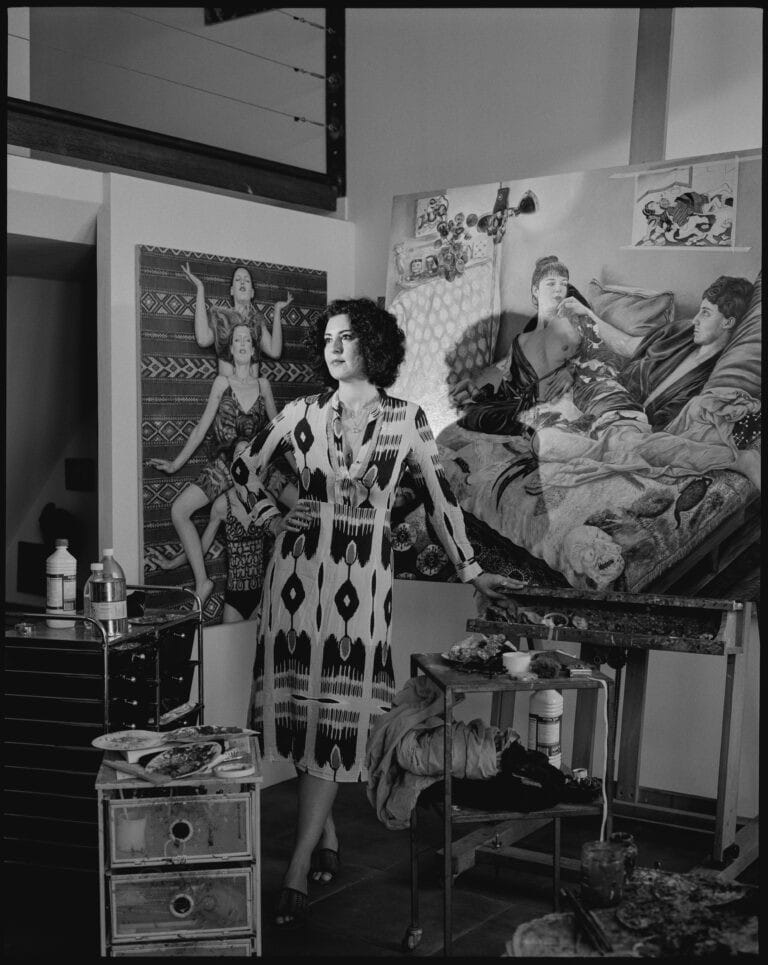
If reality feels a little boring lately, don’t worry. Li Xiang is already redesigning it. As the founder and creative force behind X+Living, the Shanghai-based design studio known for its wildly imaginative commercial spaces, she has a habit of taking the familiar world apart. She puts it back together with the enthusiasm of a child. Also, the precision of an architect, and the flair of someone who clearly had an interesting childhood in Harbin.
Since 2011, X+Living has grown into one of the most influential creative agencies in China. It has scooped up over a hundred design awards and earned the A+Awards Best Commercial Design Firm title in 2022. The studio works across architecture, interior design, landscape, and product design. It has a particular talent for bringing everyday environments back to life. Often so vividly that visitors forget what “normal” looks like.
But beneath all the fantasy lies a razor-sharp philosophy: design should refresh the way we perceive the world. It should make us feel something. It should challenge us, confuse us just a little, and convince that life still contains surprises.
Li Xiang calls these moments “sensory escape points”, and she describes her mission: “I focus more on creating psychological impact. People go through countless unconscious routines every day. They walk the same paths and enter similar spaces. This repetition can dull their perception. Through design, I aim to break this numbness of daily life, offering moments that allow people to experience the world anew.”
If your daily life suddenly feels too predictable, she would very much like to fix that for you.
The Art of Cognitive Renewal: Or, How to Turn Familiar Spaces Into Unexpected Fiction
X+Living’s work is grounded in the idea of cognitive renewal. It is the ability to make the ordinary visible again. It’s a concept that shows up everywhere in the studio’s projects. This ranges from bookstores to toy flagships to colossal parent-child theme parks. According to Li Xiang, the problem with everyday environments is not that they lack beauty. The problem is that we have stopped noticing it.
As she puts it “Everyday environments are easy to overlook because we’ve grown accustomed to their logic. The role of design is to make the familiar worthy of appreciation again. Take my Zhongshuge bookstore series as an example: I don’t want a bookstore to be just a commercial space for selling books. I want it to engage more deeply with local culture, human perception, and imagination.”
The Zhongshuge bookstores are definitely her most widely recognized works. In Chongqing, bookshelves stretch into mountain-like landscapes that seem to defy gravity. In Huai’an, the ceiling becomes a cosmic canopy. This turns the simple act of reading into a quiet orbit around the universe. In Tianjin, Italian brick architecture inspires a tapestry. It feels both historical and futuristic. Each location becomes a visual riddle, reminding visitors that even the humble bookstore can become a cultural destination.
“Through subtle adjustments of space and transformations of structure, familiar scenes are reactivated. This offers people new perceptual experiences in their daily lives. In this way, design becomes an extension of cognition, constantly refreshing the relationship between the viewer and the space.”
A Visual Identity Written by Life: From Harbin’s Snowy Fantasies to Global Art Adventures
Indeed, Li Xiang’s aesthetic is not a deliberate brand strategy; it’s autobiographical. Growing up in Harbin, she was surrounded by eclectic architectural influences: Russian domes, European silhouettes, winter landscapes that feel like living storybooks. The city itself became her first design teacher. She explains, “Navigating these spaces from a young age, I developed an early sensitivity to volume and spatial drama. Looking back, I see traces of Harbin’s whimsical, almost theatrical spirit in my own work”
She left China in her teens and spent nearly a decade abroad. In the U.K., she learned to articulate her instincts through structured architectural logic, giving her a language to match her ambition. In Germany, she encountered the work of Anish Kapoor. The experience reoriented her path. “They weren’t just objects to observe; they were worlds to step into. In that moment, something clicked: I wanted to create work that moves people not only through beauty, but through something deeper and less tangible, to open the corners of my imagination and share them with others”
The result is a visual language that blends childhood wonder with adult precision, dream with engineering.
Human Intuition and AI: A Creative Friendship With Boundaries
X+Living has been one of the earliest adopters of AI-assisted design in China, using it to simulate spatial evolution before construction begins. But Li Xiang is very clear: AI is not the artist, it’s the brainstormer. The intuition remains hers. As she puts it “In my view, intuition is not some random impulse. It’s the mind’s unconscious capacity to synthesize past experiences, knowledge, and emotions into meaningful judgment. It blends rational training with sensibility, helping us swiftly identify direction and priorities amid complex design choices.
“And, when it comes to design, AI can process intricate variables, explore endless formal options, and uncover patterns from massive datasets. Yet what remains distinctly human is the ability to raise the foundational philosophical questions, sense the emotional needs of people who inhabit space, and make value-based decisions”.
Machines can find patterns; humans decide which patterns matter. Machines generate forms; humans decide which forms hold meaning. And depending on the day, humans also decide whether those forms need more color, more emotion, or more drama.

X+Living Where Art and Commerce Flirt Shamelessly
Many of X+Living’s clients come from the commercial world, yet their spaces rarely feel like they’re trying to sell you anything. Instead, they balance business needs with narratives, culture, and emotional resonance. Li Xiang sees no contradiction here. “I see art and commerce not as opposites, but as allies. Good design should empower both, creating commercial spaces that resonate emotionally and culturally to connect brands with people”
The Dujiangyan Zhongshuge is a shining example. Located in one of China’s most culturally rich regions, the store weaves local water-management history into its architecture. By integrating stairs and bookshelves, they created guided pathways that enhance both storage and ritual. Since opening, the project has significantly increased footfall and won international awards. Ultimately, a commercial space’s value lies beyond mere function. By becoming a vessel of meaning, it allows a brand to forge deeper connections and achieve sustainable growth.
What Comes Next for Li Xiang? Everything That Doesn’t Exist Yet
Ask Li Xiang what boundaries she wants to push, and she answers with audacity: “For me, the truly exciting challenges have always been about crossing boundaries. Everything that has yet to happen is what I want to explore. If we speak of legacy, I hope X+Living is remembered for constantly expanding the boundaries of imagination”.
It’s the kind of statement that could sound reckless, if her portfolio didn’t consistently prove her capable of delivering the impossible Her legacy, she hopes, will be one of expanded imagination. Not bigger. Not louder. But deeper, changing the way people perceive reality and their place within it.
Indeed, the latest trio of X+Living projects shows Li Xiang doing what she does best: taking everyday spaces and giving them a noticeable push toward the unexpected.
Beijing Wukesong Meland Club
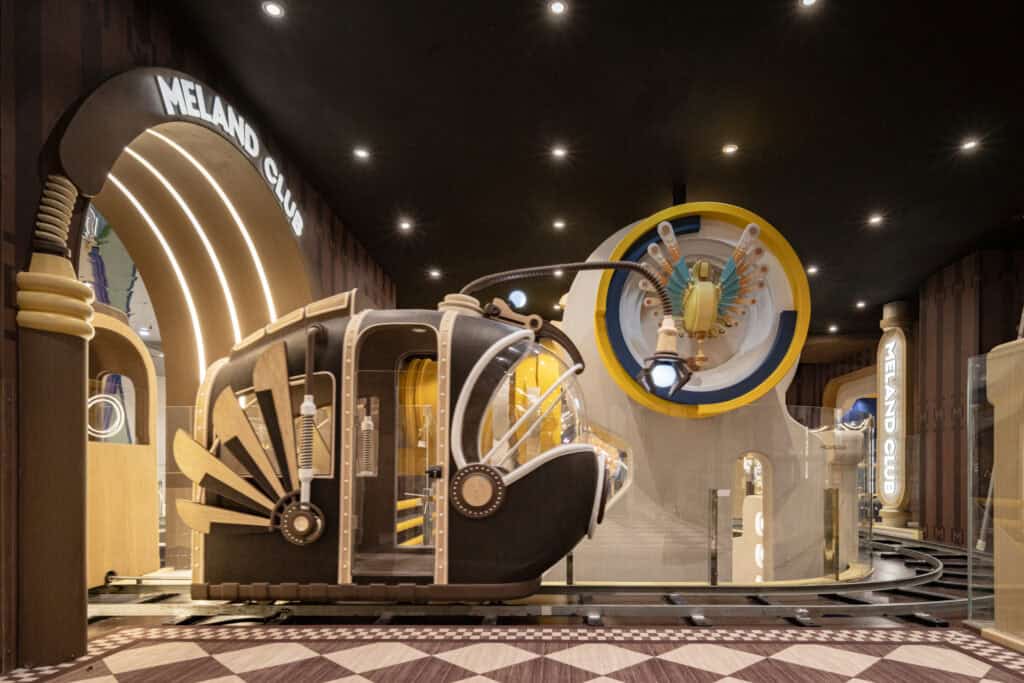
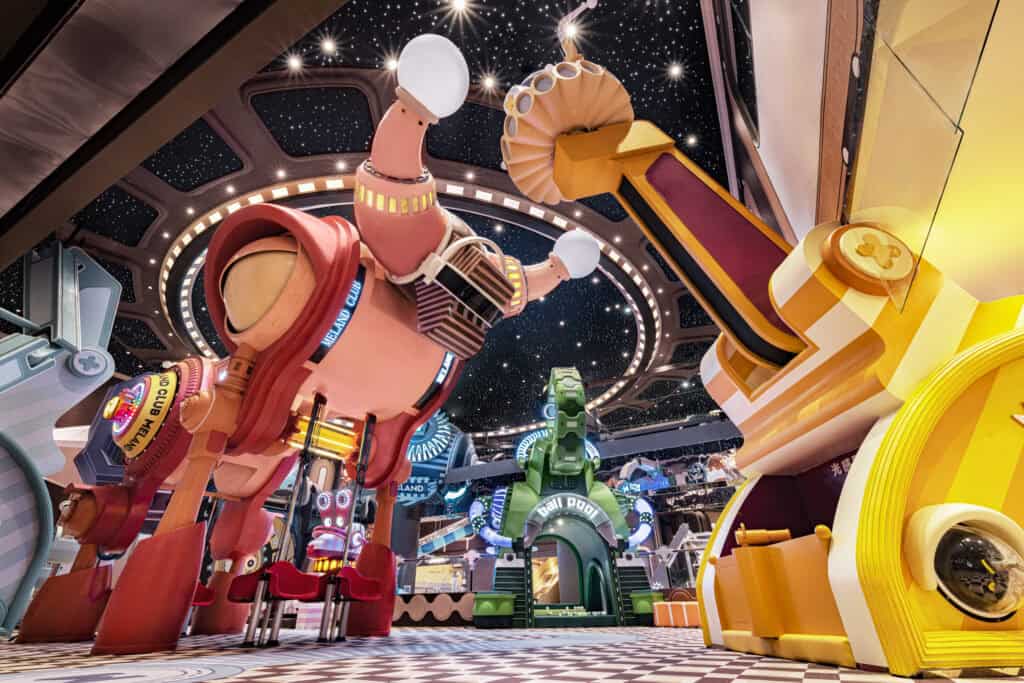
If a Victorian inventor, a biologist and a child with a sugar rush designed a theme park together, the result might look something like the Beijing Wukesong Meland Club. Spread over more than 10,000 square meters, this latest flagship for one of China’s most influential parent-child theme park brands transforms nature into a mechanical fantasy.
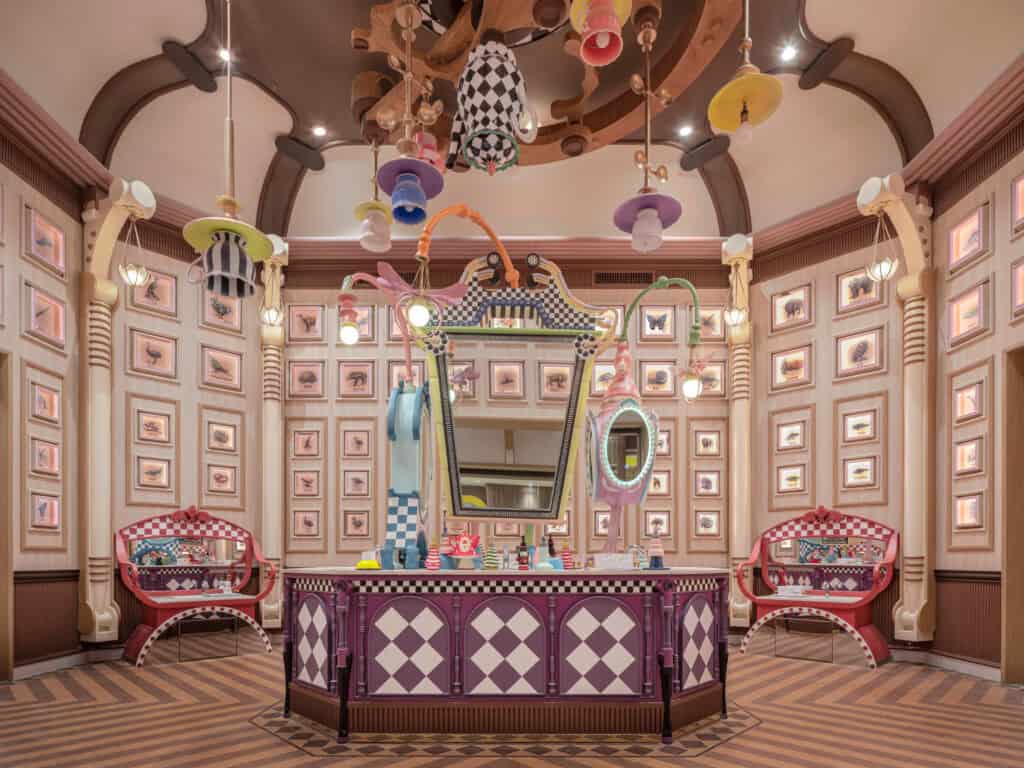
Li Xiang created an entire narrative about endangered species returning as mechanical guardians. Her team incorporated the imagery of 60 extinct animals into illuminated scenes that double as both entertainment and education. The result is a place where children climb through neon jungles, crawl beneath mechanical domes, and wander through compressed, multi-layered landscapes. Even the bathrooms become escape rooms decorated with extinct creatures, reflective illusions, and lights that make people forget where they are.
If the future of theme parks looks like this project, parents may start attending without their children.
Dujiangyan Zhongshuge
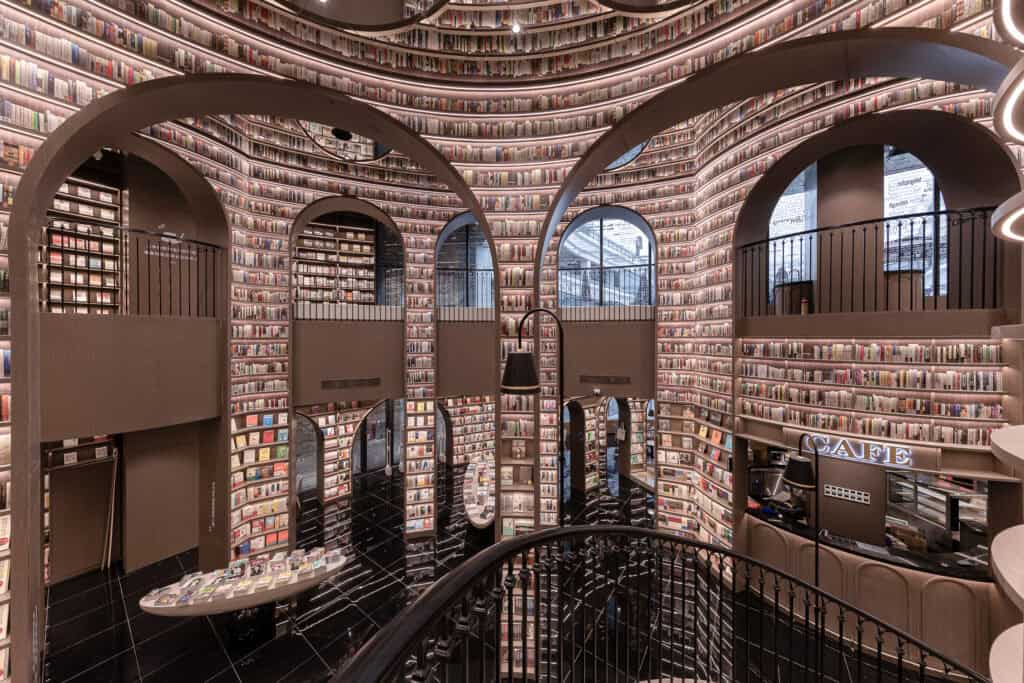
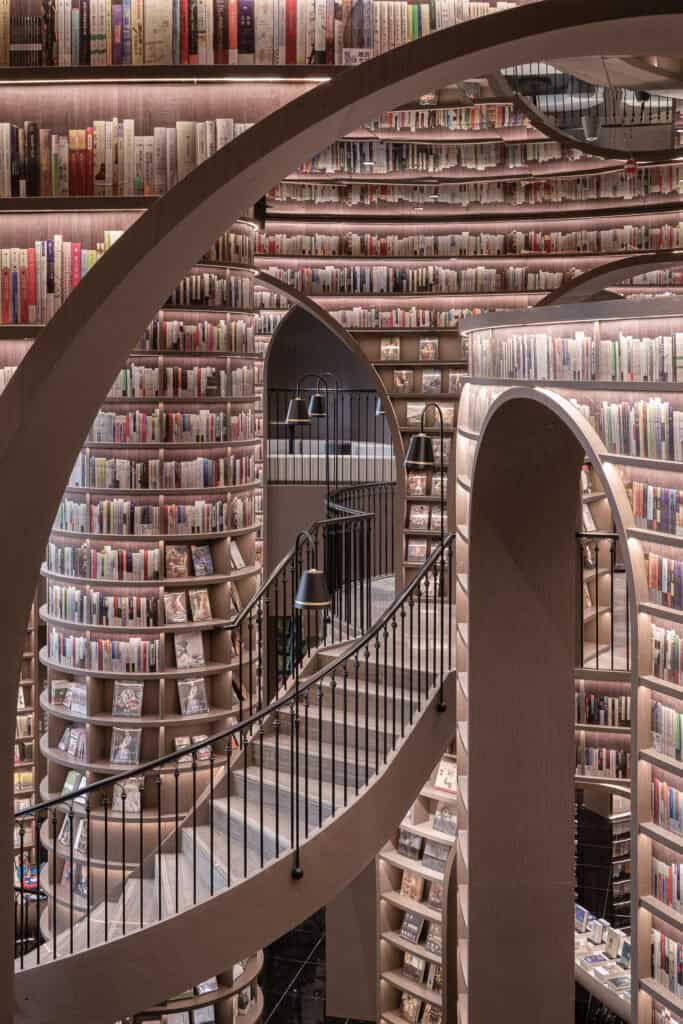
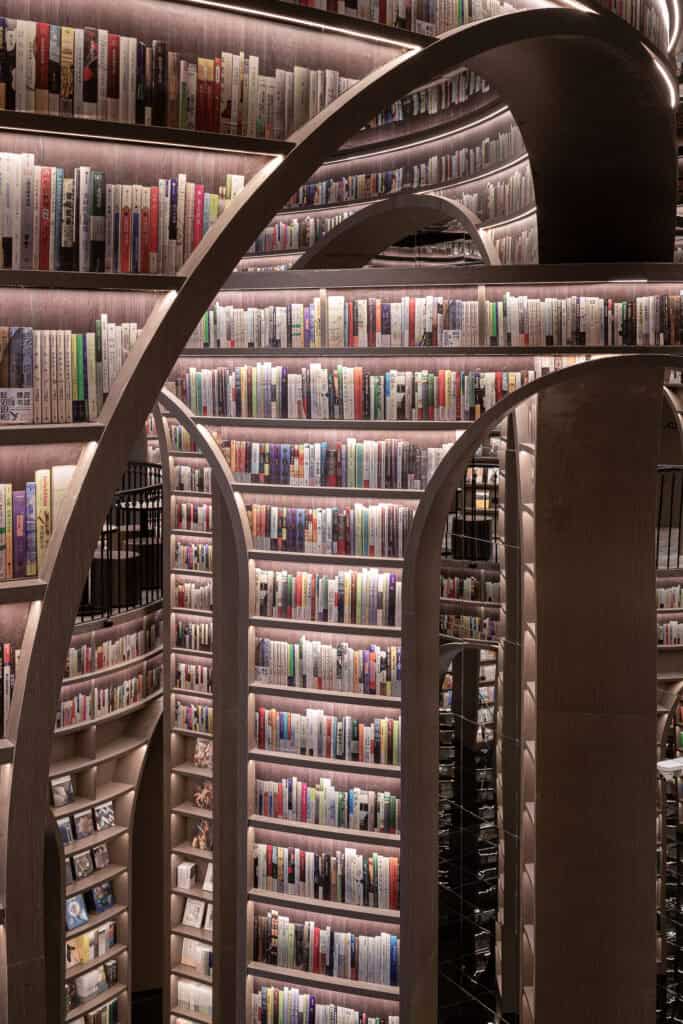
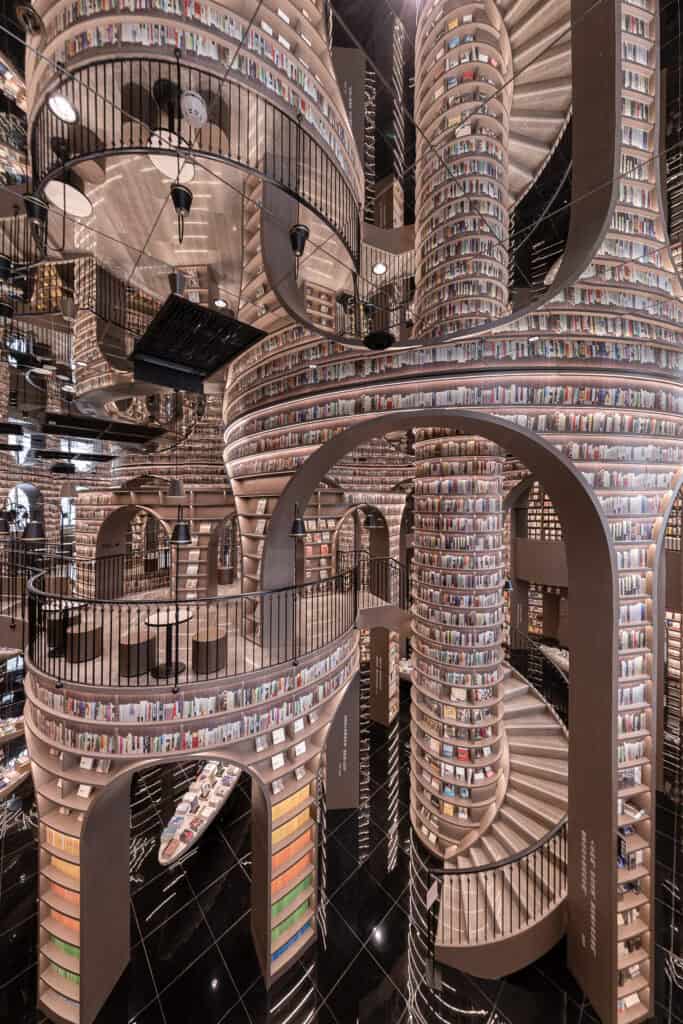
In the historic city of Dujiangyan, X+Living created a bookstore that feels like a poem in architectural form. Push open the glass curtain doors and a sweeping C-shaped bookshelf greets you with walnut warmth, bending like an ancient tiled roof.
Columns merge into shelving, drawing readers deeper through winding passages. The children’s zone erupts into a bamboo forest where pandas appear to climb the walls. Mirror ceilings stretch the central hall into infinity, transforming literature into a cosmic experience, while book-patterned film on higher shelves creates the illusion of unreachable mountains.
The entire space functions like a cultural retreat, offering readers moments of intimacy and scenic compositions that echo the spirit of Dujiangyan’s landscape. It’s a destination for both knowledge and daydreaming, which feels appropriate for a city built on ancient wisdom.

X+Living’s POP MART Bangkok ICON SIAM
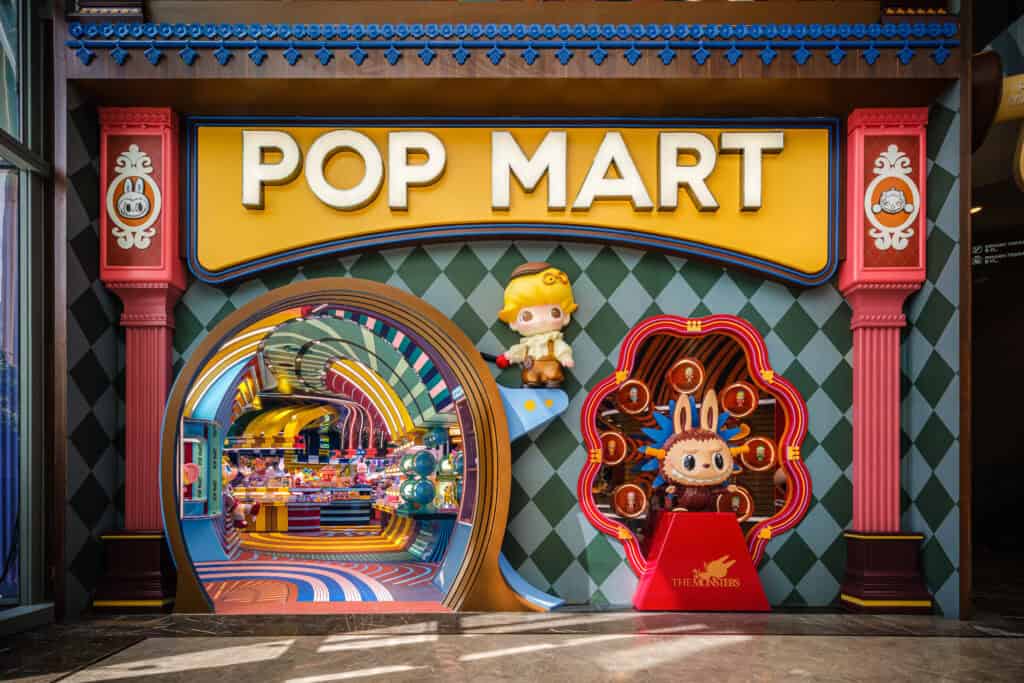
POP MART’s flagship at ICON SIAM in Bangkok, one of Southeast Asia’s most luxurious retail destinations, is essentially what happens when a dream decides to open a store. Designed as a progression through the stages of dreaming, the space moves from to fantasy to delirium with a confidence normally reserved for theatre productions.
The entrance resembles a vintage music box in mid-transformation, complete with a golden winding key. Characters peek out from behind shimmering curtains, setting the tone for a space that behaves like a dream caught in motion. Once inside, a vortex guides visitors through immersive displays that echo the rhythm of Thailand’s river culture.
The second floor shifts into a pixel universe inspired by pop toys and the modular structure of Wat Arun’s architecture. Colors fragment into hundreds of tiny cubes, creating a sense of suspense, as if every corner might lead to another surprise.
Finally, the café offers a soft landing. Classical Western colonnades mingle with mischievous IP characters, pastel ceilings meet warm red accents, and reality blends so gently with fantasy that visitors stop trying to separate the two.

Across these projects, Li Xiang and X+Living have built a body of work that consistently resets the imagination. Each space operates like a disruption, reminding visitors that the world is still full of wonder if we dare to redesign it. With that in mind, consider this less a summary of X+Living’s work and more a preview of the realities she hasn’t created yet.
X+Living Website
Share this post

Agnese La Spisa is an Italian creative based in Italy, specializing in publishing and fashion communication. At IRK Magazine, she brings together creativity, research, and design to shape stories with clarity and style. Curious and collaborative, she is driven by a passion for exploring culture, aesthetics, and the narratives that connect people, ideas, and disciplines.
Read Next