São Paulo Biennial: The commanding presence of French artists
Chapelle Projects
French artists across generations defined the 36th edition of the São Paulo Biennial
The São Paulo Biennial is known for the strength of its exhibitions. It blends local artists with international peers. This year, French artists across generations defined the 36th edition. Chapelle Projects spotlighted these key figures and their polyphonic works. Their creations filled the Ciccillo Matarazzo Pavilion in Parque do Ibirapuera. They also appeared in several other institutions across the Brazilian capital.
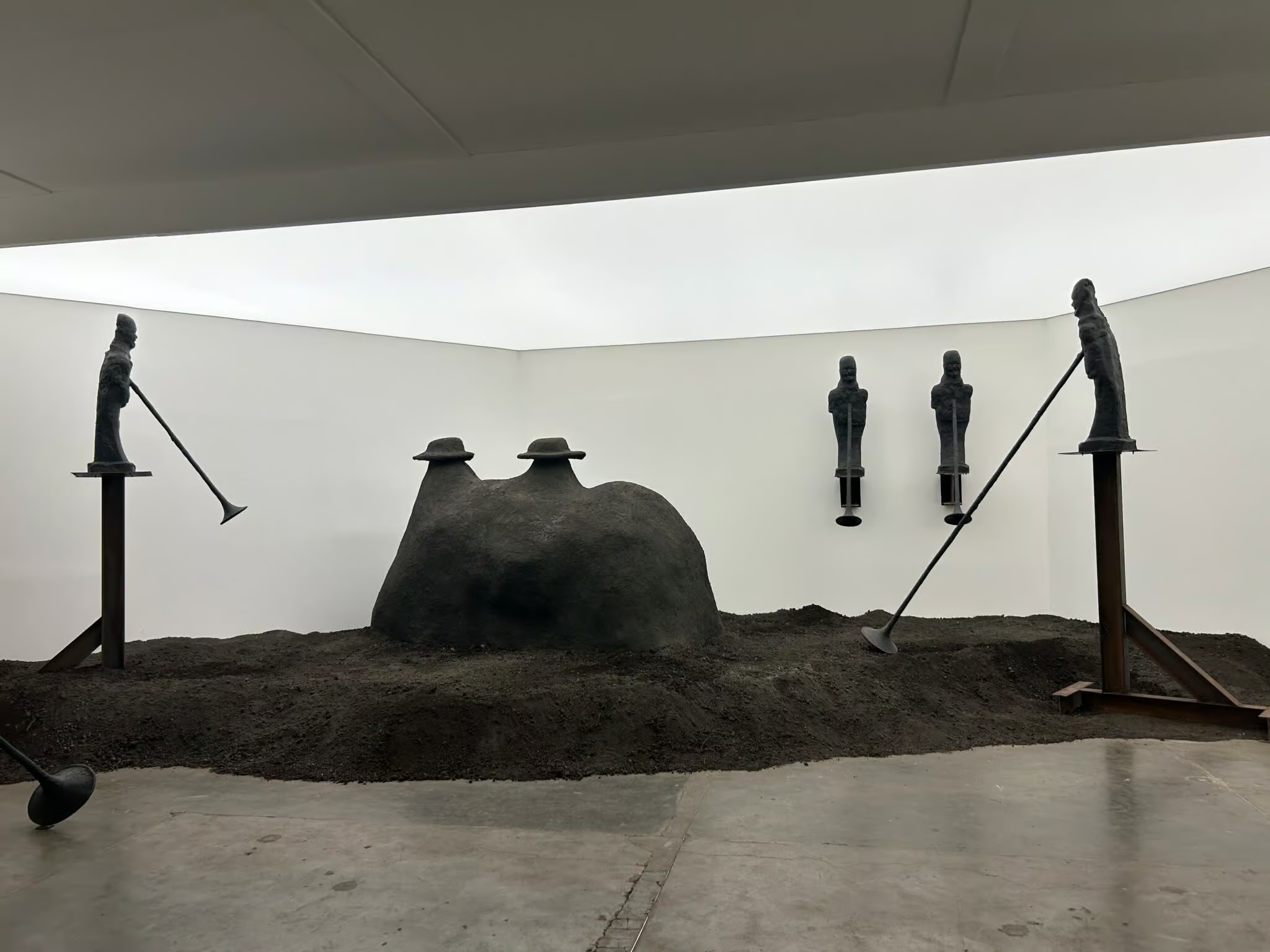
Pol Taburet: Someone’s Child (2025), 36th São Paulo Biennial
In a room designed as a swamp, a uniform light by the brilliant Matière Noire carves out a liminal zone where matter and symbols fuse. Meanwhile, three sculptures, “Lungs” (bronze and trumpets), “Guts” (bronze shaped as a face), and “Belly” (earth and polystyrene), stir the space with an immersive, almost suffocating atmosphere poised on the edge of mutation. As a result, the sculptures rise to meet the viewer, shifting between ghostly and benevolent forms. These hybrid presences, part human, part animal, part spirit, lean into the room’s center and seem to whisper secrets to one another.
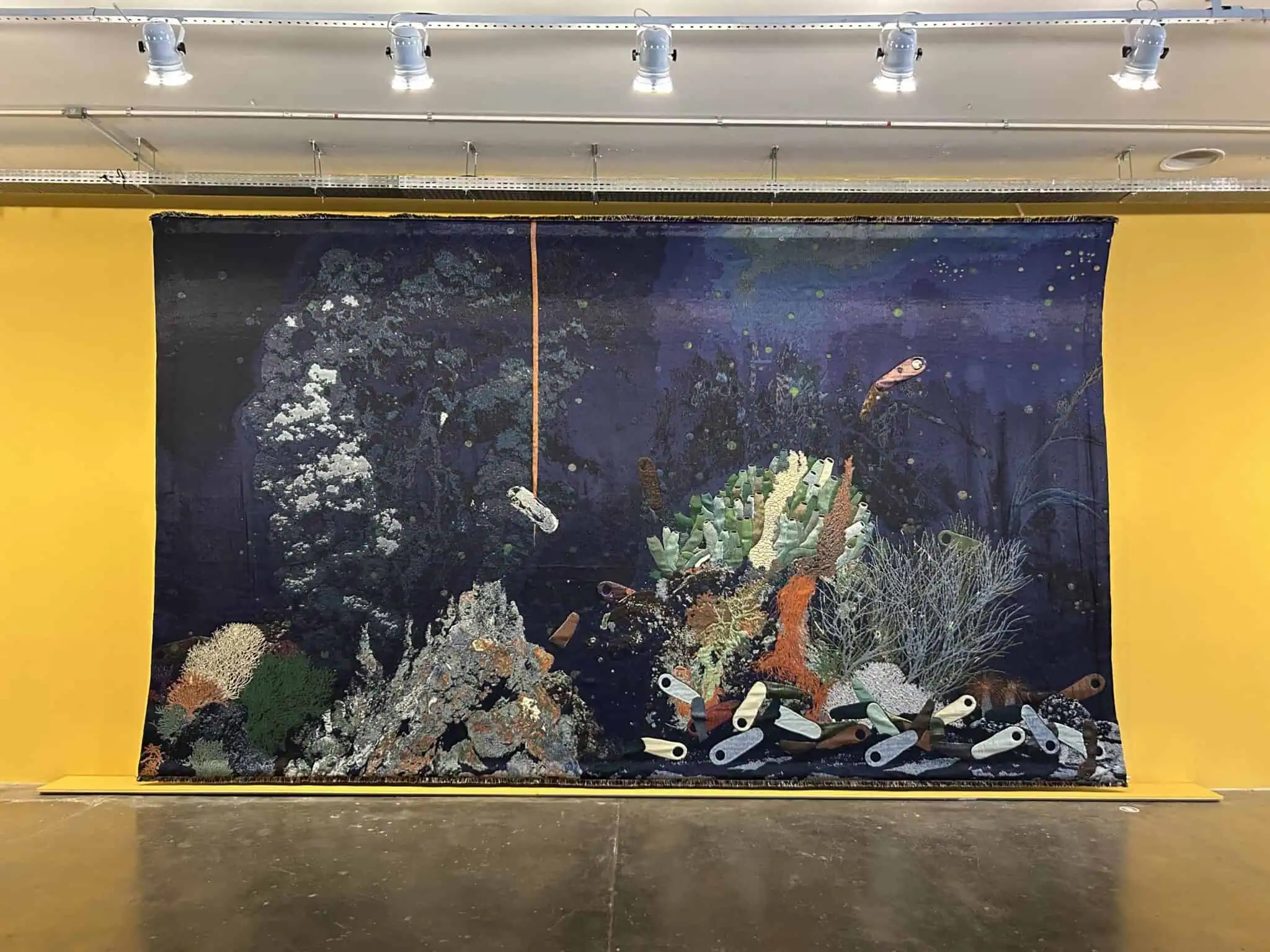
Otobong Nkanga: Unearthed – Sunlight (2021), 36th São Paulo Biennial
Dazzling like woven memory, the tapestry “Unearthed – Sunlight”(2021) unfolds across several floors. Its wool, viscose, mohair, and polyester threads build a stylized forest. Each color, in turn, echoes a landscape. Nkanga also reveals a visual poetry that interlaces extraction, memory, identities, and ecology. As a result, the interwoven organic forms become a sensitive metaphor for the ties between humans and the environment. Ultimately, these ties twist through the geopolitical and ecological tensions that shape us.
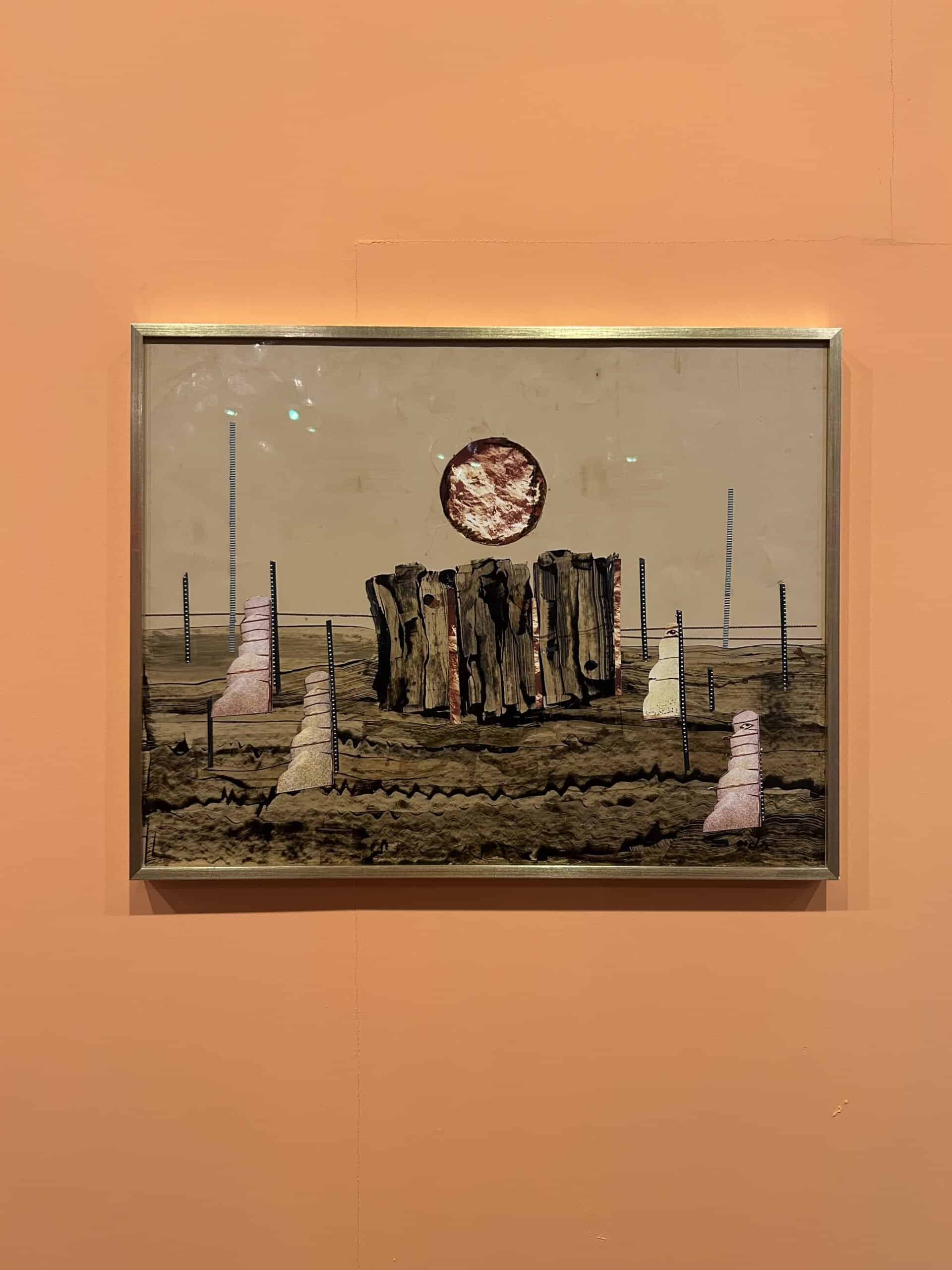
Behjat Sadr: Untitled (1956), 36th São Paulo Biennial
In her works, Iranian artist Behjat Sadr paints abstract landscapes filled with expressive fury. This reflects an uncontainable desire to explore the depth of the canvas, voids, or existential spirals. These paintings, several decades old, date back to the 1950s when she broke away from academic constraints. They become a painted vortex where synthetic paints carve into the emotional body of the artwork. These are abstractions haunted by exile, saturated with a melancholy accompanied by the poems of Sohrab Sepehri or Forough Farrokhzad. Moreover, they evoke a space where memory and color bloom through resilience.
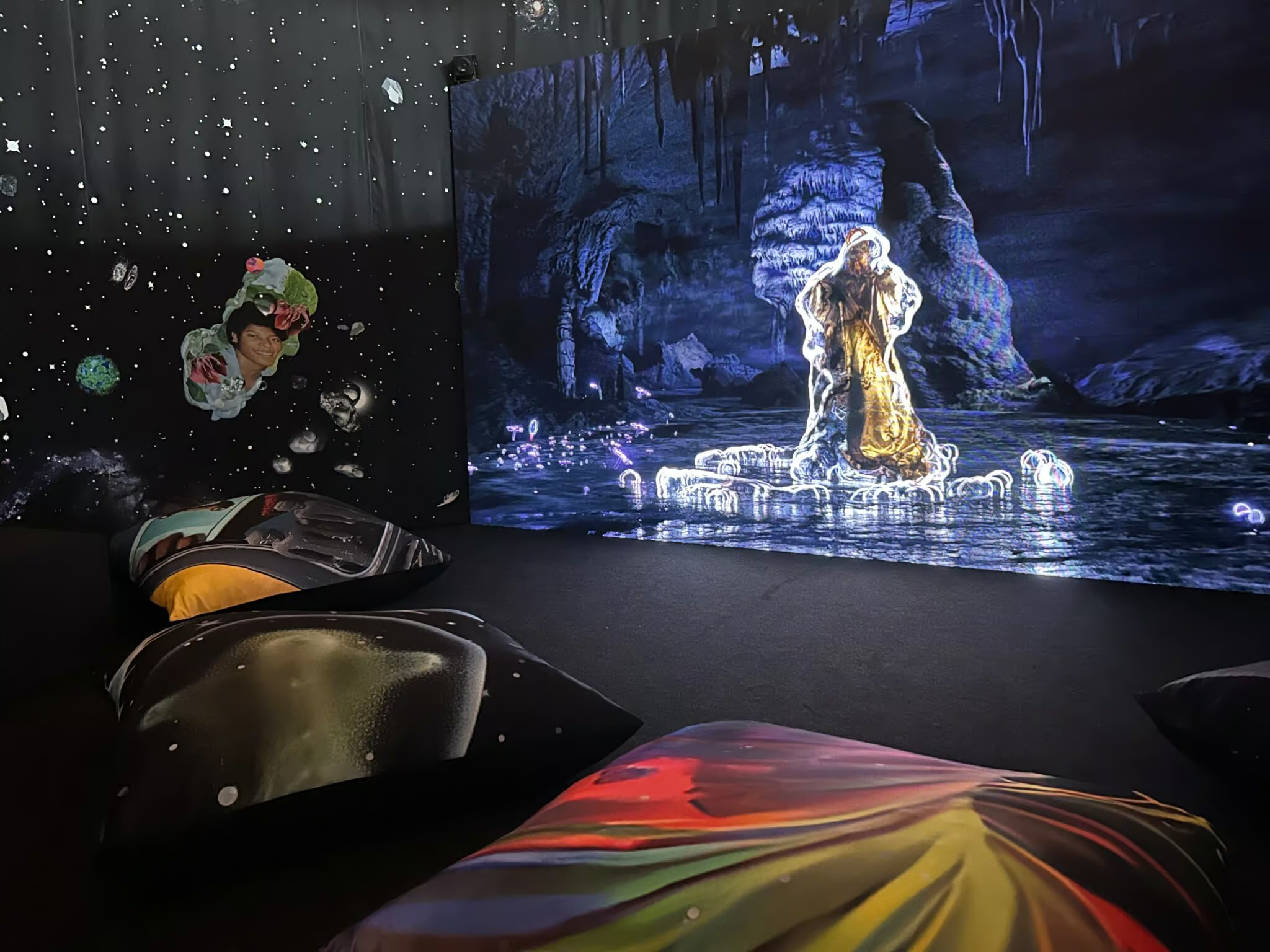
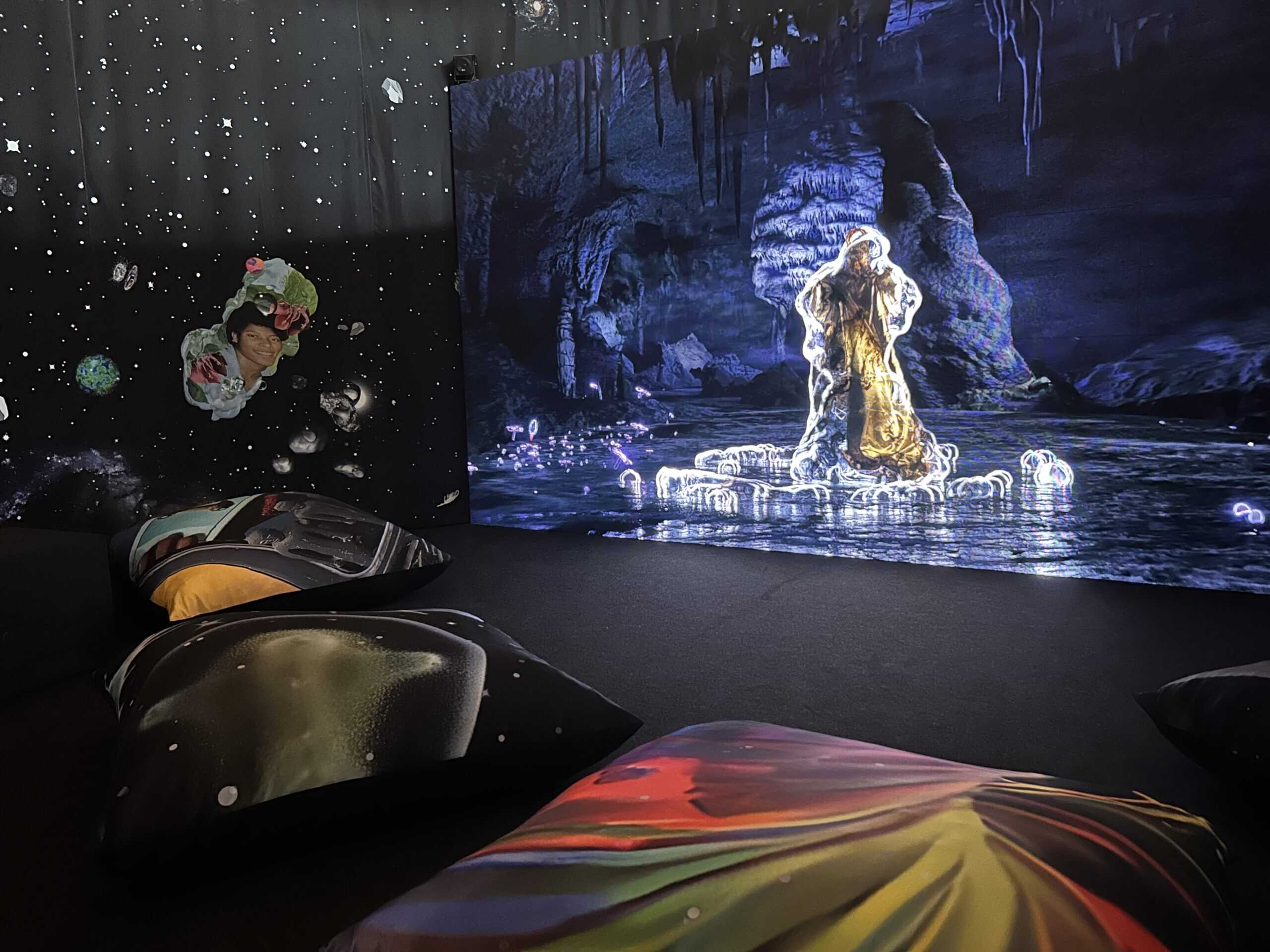
Josèfa Ntjam: Dislocations (2022, HD film, 18 min), 36th São Paulo Biennial
With Dislocations, Josèfa Ntjam leads her avatar Persona into a floating cavern, half-cosmic, half-aquatic; Here, fossils and shells emerge like suspended archives. This liquid landscape revives the erased memories of Cameroonian independence struggles, transforming the cave into a living archive. Undoubtedly, between dissolution and rebirth, Persona drifts into a story where politics, myth, and poetry merge within this fluid matter.
Tarik Kiswanson: Threshold, Instituto Tomie Ohtake, São Paulo Biennial
In his exhibition “Threshold” associated to the São Paulo Biennial, Tarik Kiswanson builds a spatial poem where exile, waiting, and colonial traces intersect. Particularly, in one of the two rooms at the Instituto Tomie Ohtake, a suspended volume reveals a narrow interior only visible as the visitor crosses the space. Meanwhile, three objects levitate: a chair from Brazil’s immigration offices, a stool from a colonial-era Catholic church, and a cocoon-like sculpture named Cradle. Together, they act as metaphors for the institutional thresholds crossed by bodies in transition. Ultimately, this sculptural architecture suspends exile, history, and memory. It invites visitors to feel what escapes fixed identities.
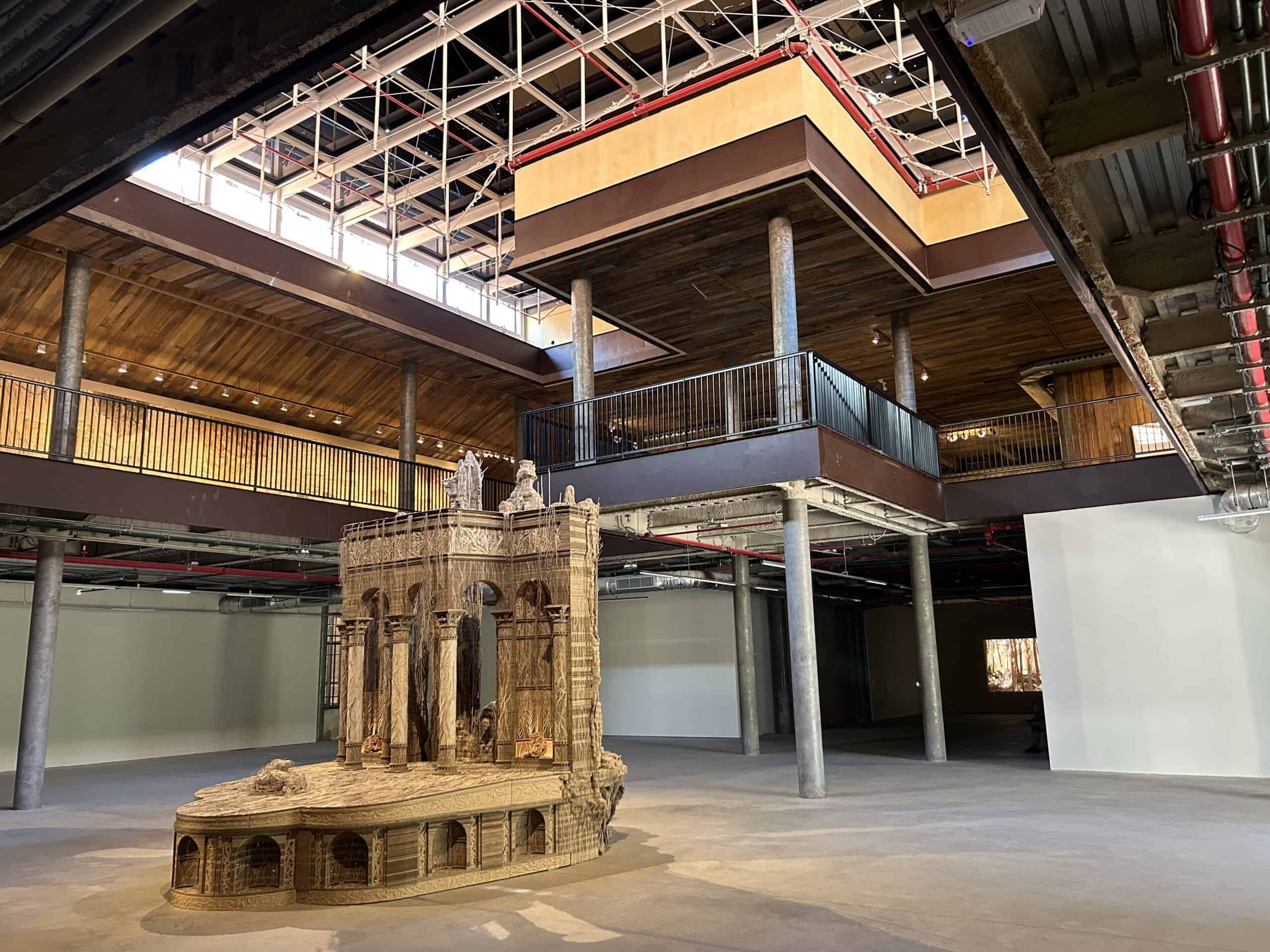
Eva Jospin: Re-Selvagem, Casa Bradesco, São Paulo Biennial
With Re-Selvagem, Eva Jospin re-enchants the forest cycle. Markedly, she resurrects corrugated cardboard, an industrial residue born from tree cellulose, and turns it into labyrinthine sculptures of trunks, branches, and roots. She stacks successive layers of cardboard to build imaginary jungles where matter, memory, and gesture fuse. The work becomes a return to material and imagination, driven not by chiseling but by the contemplative force of artisanal craft. On the walls, the tapestry “Chambre de Soie”, a monumental project created by three hundred embroiderers over nearly one hundred meters, binds time, memory, and technique in equal parts artisanal and artistic.
Share this post
Each month, Chapelle Projects, the Paris-based art consultancy founded by Eléonore and Joséphine, invites IRK readers into their world of discovery. From the ateliers of rising artists to the silent beauty of architectural spaces, they unearth the objects, exhibitions, and creative minds shaping how we live with art today.
photo © François Halard
“Curated Encounters by Chapelle Projects” isn’t about trends for trends’ sake. It’s about what moves us. What transforms a space into a story. And what makes culture feel alive right now.
Read Next