Silhouette – The politics
Kendra Dresser
From trousers to miniskirts, how the silhouette became a battleground for power, protest, and visibility in fashion
Clothing does not simply follow social change; it actively makes it visible. Designers shape the outline of the body, the cut of a leg, and the rise of a hemline, turning these elements into deliberate negotiations of power. Within the history of women’s fashion, trousers and the miniskirt demonstrate this most clearly. Both reshaped how the female body moved through the world, how much space it occupied, and how its silhouette was seen.
When women wore trousers, they stepped into a silhouette historically reserved for authority. When they raised the hemline, they controlled visibility on their own terms. Throughout the twentieth century, these shifts did more than redefine style; they actively reconfigured the relationship between women, space, and social expectations. Fashion did not simply change appearance; it transformed who could be seen, and how.
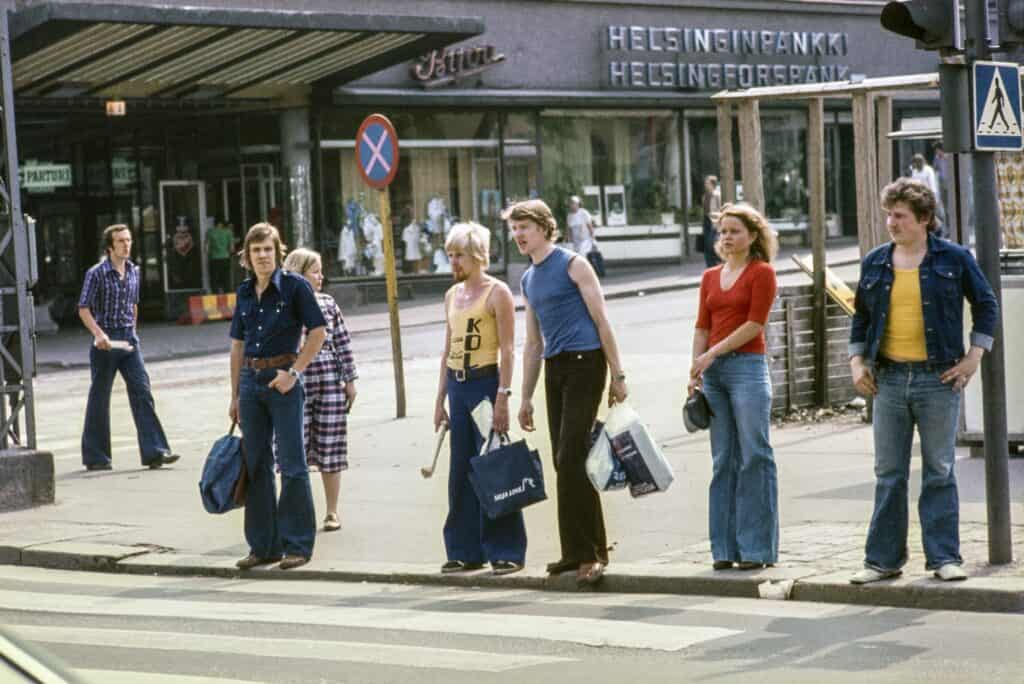
WOMEN, TROUSERS, AND THE POLITICS OF DRESS
For a long time in Western societies, men kept trousers for themselves. They used them to show power, movement, and a place in public life. At the same time, people expected women to wear skirts, which linked them to modesty and the home. This divide did not exist everywhere. In many non-Western cultures, women wore loose trousers for practical reasons, showing that clothing rules around gender are made by society, not fixed.
By the nineteenth century, early feminists began to challenge these rules through dress reform, including the bloomer costume, which focused on comfort and movement. Society reacted quickly and harshly. People mocked and rejected these clothes, seeing them as a threat to traditional gender roles.
More women began wearing trousers in the twentieth century, especially during the World Wars, when factory work required practical clothing. Even then, many people only partly accepted this change.
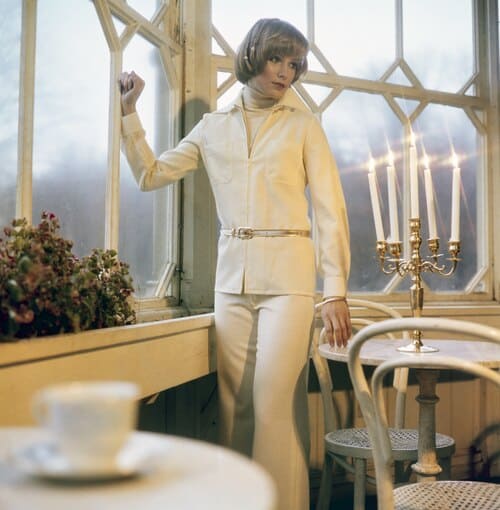
The 1960s and 1970s marked a decisive shift. Within the context of second-wave feminism, trousers became a symbol of liberation, signalling autonomy, equality, and access to spaces historically reserved for men. Today, while women in trousers are widely accepted, the politics of dress persist. Clothing, and the silhouette it creates, remains a site where gender is negotiated, enforced, and contested.
WIDENING THE BODY, WIDENING THE WORLD
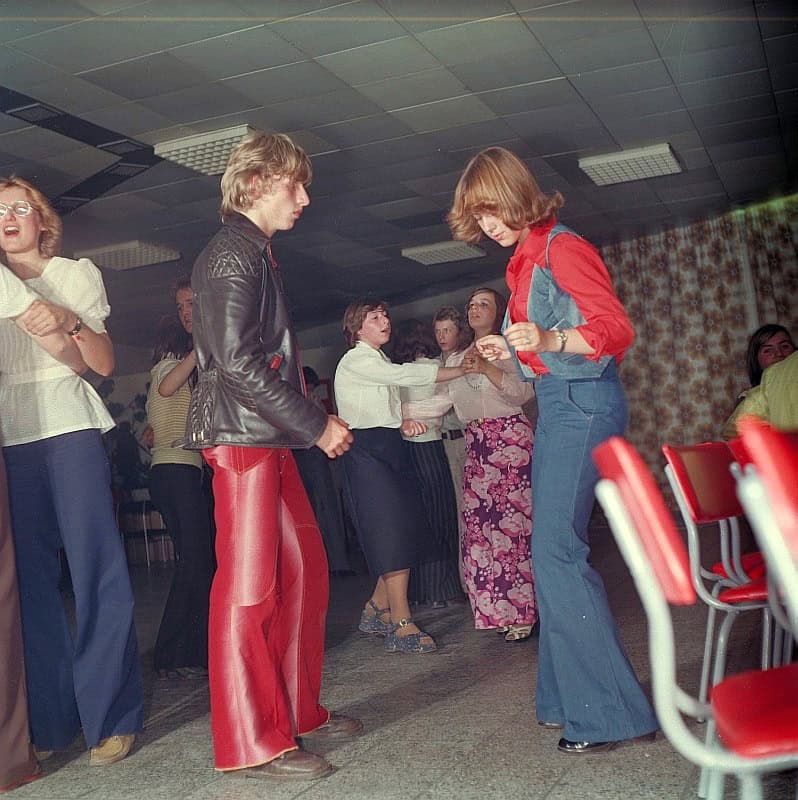
Bell-bottom trousers did not begin as a form of rebellion, but as a practical design. Nineteenth-century sailors wore wide-legged trousers because they allowed easy movement across unstable surfaces. By the late 1960s and 1970s, people reworked this practical silhouette within a culture shaped by protest and resistance.
As movements against the Vietnam War, racial inequality, and social hierarchies grew stronger, people used fashion to express political identity. Bell-bottoms broke away from the narrow, structured lines of traditional tailoring and introduced a shape that felt loose, fluid, and harder to control.
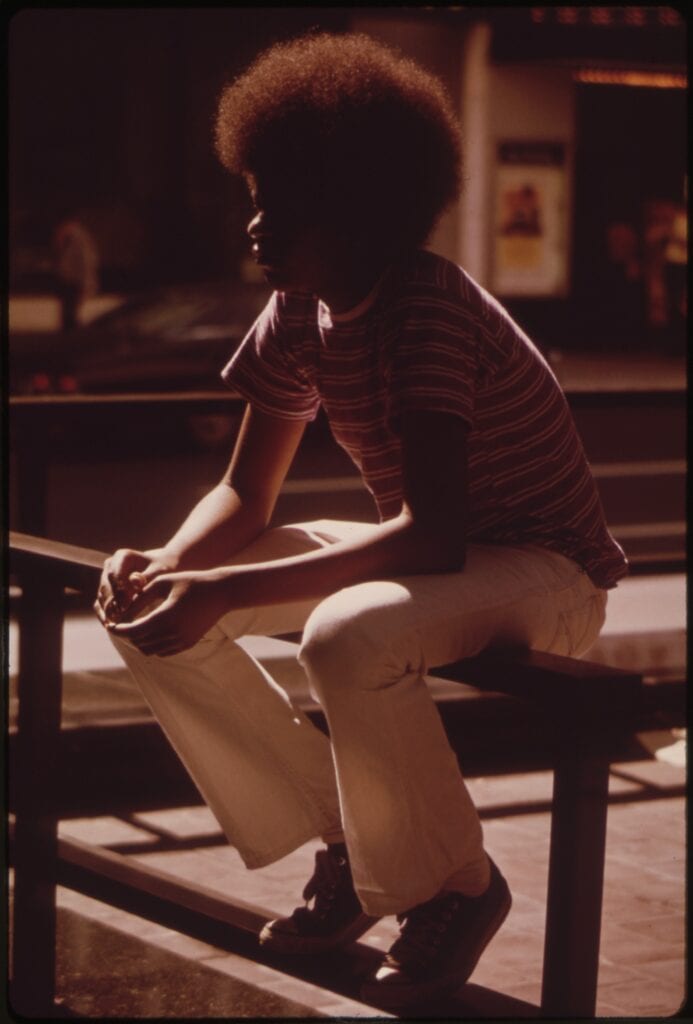
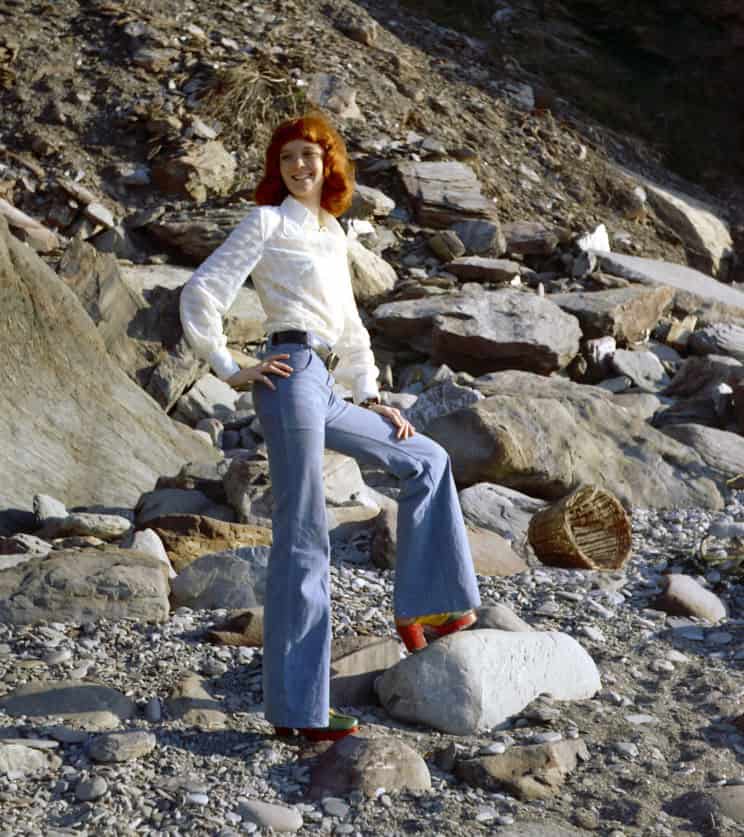
The flared leg changed how the body moved through space, widening the lower half and creating constant motion. This movement reflected a wider rejection of stillness and conformity.
Denim strengthened this meaning. People already linked it to work, and civil rights activists chose it to show support for the working class and reject elite dress codes. Groups such as the Black Panther Party used simple, practical clothing to show strength while avoiding luxury. In this setting, people turned flared denim into something both personal and political, often adding embroidery, patches, and colour.
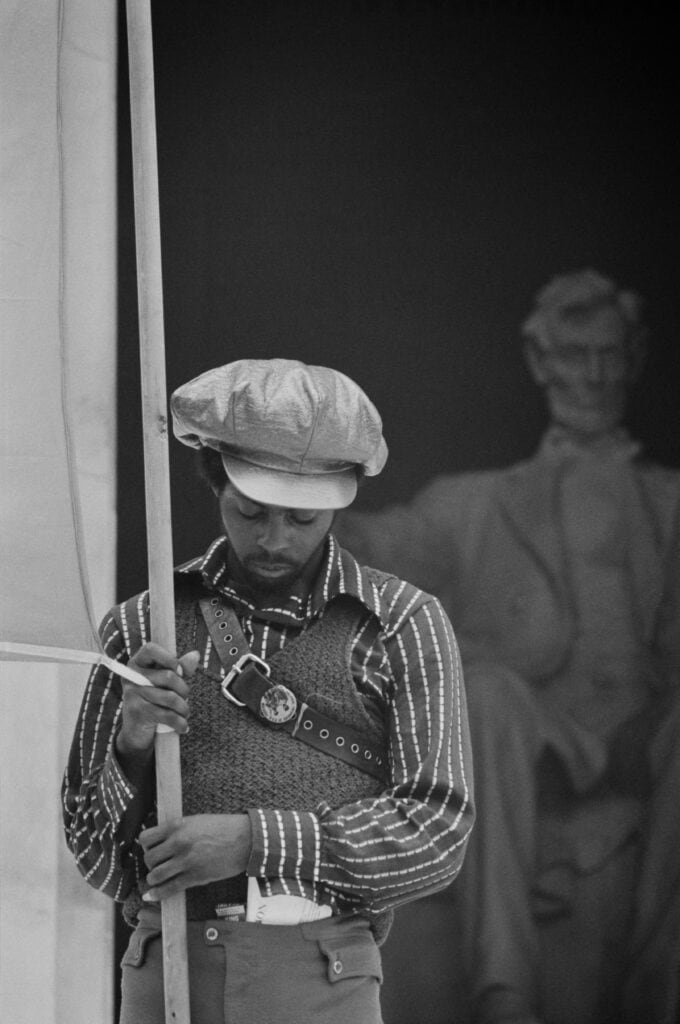
To widen the silhouette was to widen the presence. In a society structured around limitation, taking up space became a visible act of resistance.
REVEALING THE BODY, RECLAIMING THE GAZE
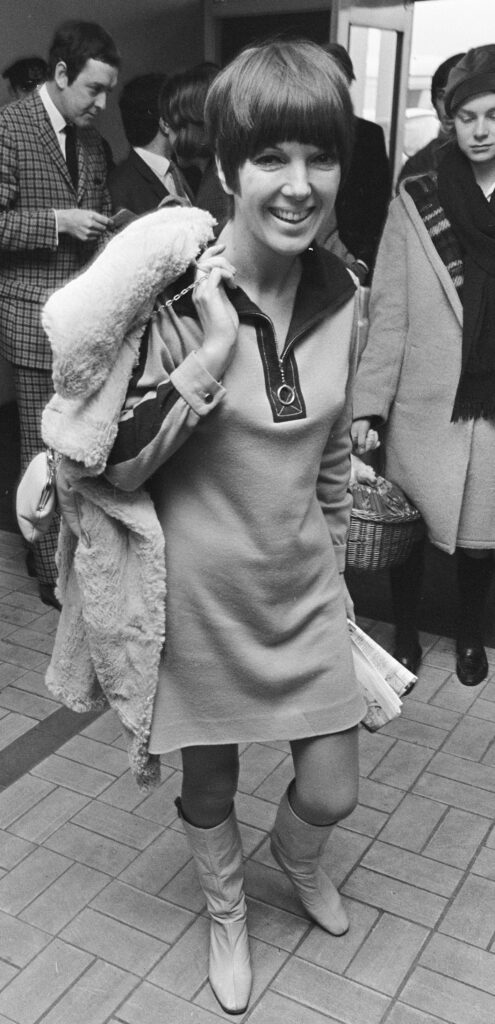
If flares expanded the body outward, the miniskirt brought it into focus. Designers such as Mary Quant introduced it in the 1960s, and the shorter hemline did more than change fashion; it changed how people saw the body.
For centuries, long skirts controlled modesty and limited movement, forcing smaller steps and a slower pace. The miniskirt broke both limits. By freeing the legs and changing the silhouette, it gave women more speed, ease, and confidence. It reflected a time when women became more visible in public, at work, and in city life.
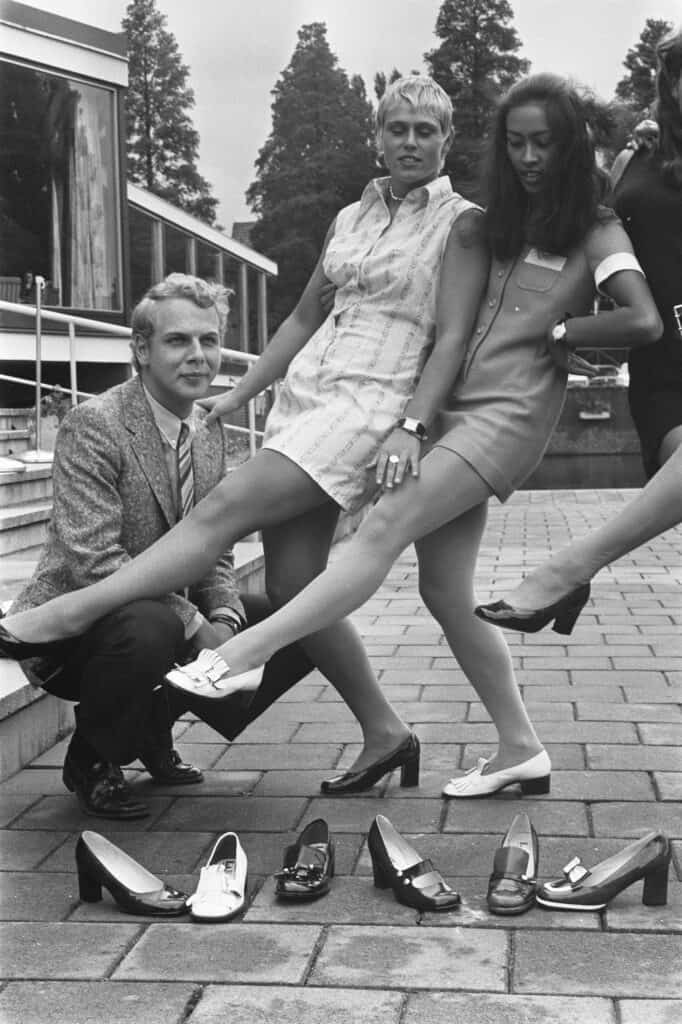
This shift is connected to second-wave feminism, where women pushed for control over their bodies and self-expression. The miniskirt also revealed tension. Some people saw it as freedom, while others saw it as too provocative.
This backlash revealed what was truly at stake. The issue was not exposure, but authority. Who controls the image of the female body? Who decides what is appropriate to show?
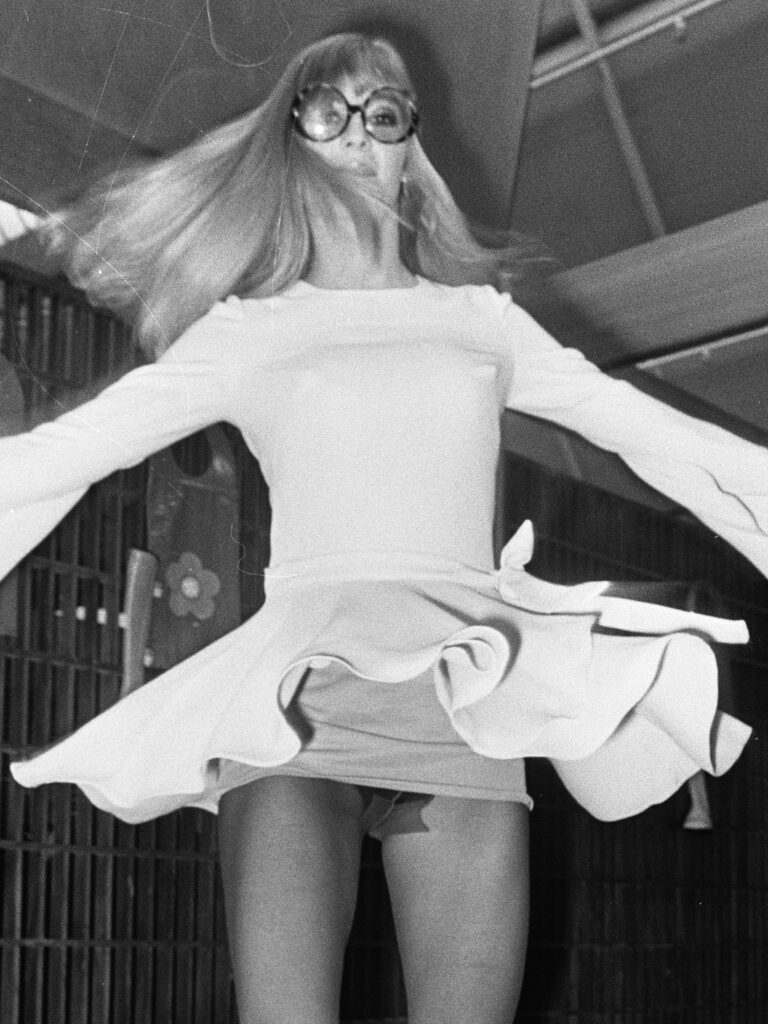
The miniskirt did not simply reveal the body; it actively repositioned it. Women made visibility intentional. The figure no longer waited to be seen; it determined how it appeared and on whose terms.
THE POWER OF A SILHOUETTE
From the adoption of trousers to the rise of bell-bottoms and the miniskirt, women’s fashion shows a wider struggle over space, movement, and control. These garments did not just follow cultural change; they helped shape it.
Wider legs and shorter hemlines changed how the body moved in public, how it took up space, and how others understood it. What may look like style is actually structure
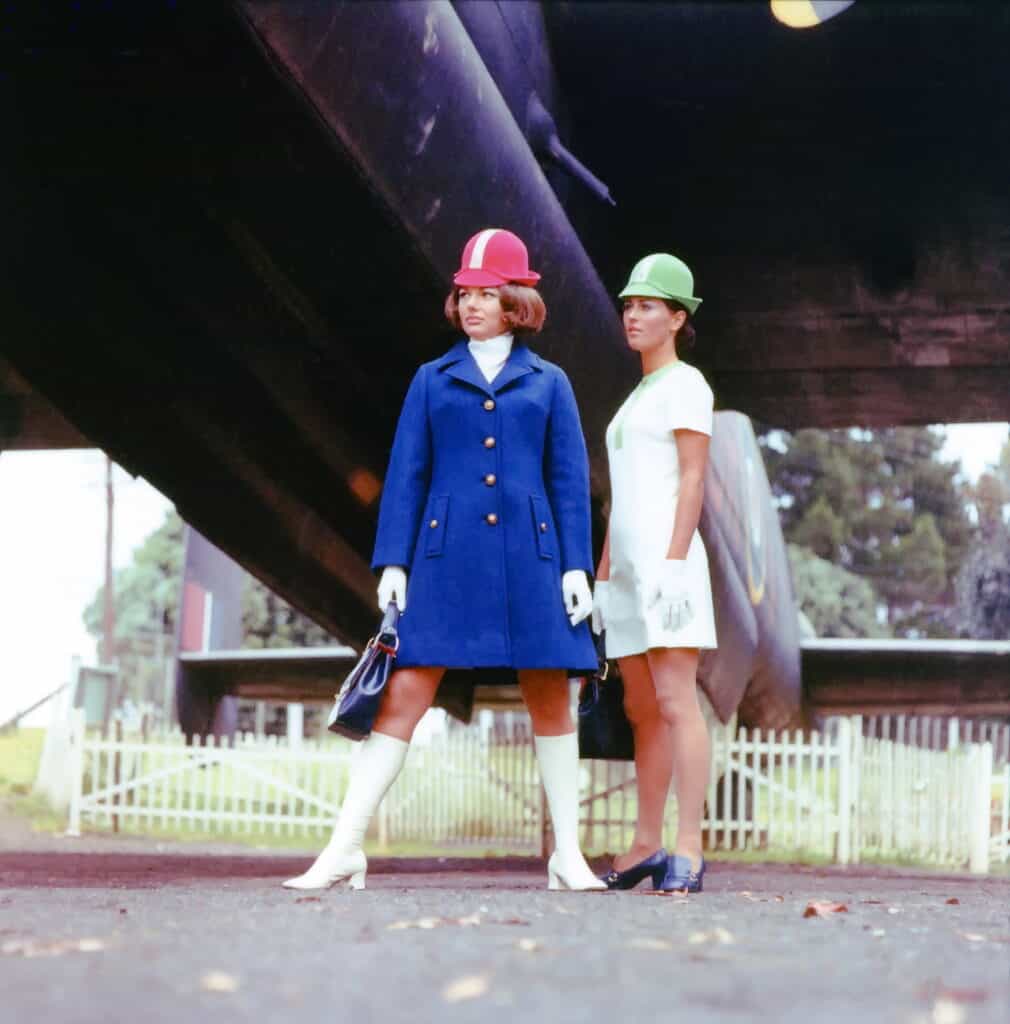
Although these shifts belong to the past, they continue to shape the present. The politics of visibility still determine who takes up space and who gains recognition in fashion today.
Image Credit
- Disco dancers (Germany, 1977) Eugen Nosko, Dancers at a discotheque, Hermsdorf, 1977. Attribution: Deutsche Fotothek. Via Wikimedia Commons. Licensed under CC BY-SA 3.0 DE.
- Zebra crossing (1977) Pekka Punkari, Pedestrians waiting to cross Mannerheimintie at Lasipalatsi, Helsinki (Simonkatu 1), 1977. Helsinki City Museum via Wikimedia Commons. Licensed under CC BY 4.0.
- White suit and trousers (1976) Seppo Konstig, White fashion for Christmas 1976, Finland, 1976. Courtesy Helsinki City Museum. Via Wikimedia Commons. Public domain.
- Fence sitting (DOCUMERICA) Tom Hubbard, Fence sitting at Fountain Square, in the background is Vine Street, Cincinnati, Ohio, 1973. Courtesy U.S. National Archives. Public domain.
- Bell-bottom jeans (1970s) Mike Powell, Redhead Beach Bell Bottoms, mid-1970s. Via Wikimedia Commons. Licensed under CC BY-SA 2.0.
- Black Panther protest Thomas J. O’Halloran and Warren K. Leffler for U.S. News & World Report, Member of the Black Panther Party holding a banner for the Revolutionary People’s Constitutional Convention in front of the Lincoln Memorial, Washington, D.C., 19 June 1970. Via Wikimedia Commons. No known copyright restrictions.
- Hilton Amsterdam (1969) Rob Mieremet for Anefo, Winter collection 1969–1970, Lancia shoe factory, Hilton Amsterdam, 22 August 1969. Nationaal Archief via Wikimedia Commons. Public domain (CC0 1.0).
- Mary Quant runway (twirling model) Jack de Nijs for Anefo, Model at a Mary Quant fashion show, twirling to reveal the roll-on girdle and tights worn under her flaring miniskirt, Utrecht, 24 March 1969. Via Wikimedia Commons. Licensed under CC BY-SA 3.0 NL.
- Mary Quant portrait (1966) Jack de Nijs for Anefo, Mary Quant wearing a mini dress of her own design, with a sheepskin coat and bag thrown over her shoulder, 16 December 1966. Via Wikimedia Commons. Licensed under CC BY-SA 3.0 NL.
- Air hostess uniform (1970) Archives New Zealand, Air Hostess Uniform 1970 Lollipop 006, 17 July 2013. Via Wikimedia Commons. Licensed under CC BY-SA 2.0.
Images sourced from Library of Congress, Wikimedia Commons, and U.S. National Archives. All images are public domain or Creative Commons licensed.
Share this post
Kendra Dresser is in Communications and Public Relations with a focus on how fashion, media, and culture shape the way we see the world and ourselves.
She’s interested in the connection between image and meaning: how a campaign, an outfit, or a trend can say something deeper about identity, mood, and the cultural moment.
She’s especially drawn to how Generation Z uses fashion and beauty to express individuality, often in bold, layered, and playful ways. She’s also curious about how social media continues to reshape storytelling, changing how we create, share, and connect through visual culture.
To Kendra, fashion is more than just style; it’s a language! One that reflects who we are, how we feel, and what we stand for. She’s committed to sustainability and believes fashion and culture should not only inspire but also respect the planet.
Read Next