Valentina Lobos’ Embroidery
Agnese La Spisa
Valentina Lobos Stitching Memory, Love and Resistance One Thread at a Time
Embroidery has a reputation problem. Often dismissed as decorative, domestic, or politely nostalgic, it’s rarely credited with the power to speak loudly about history, politics, or desire. Valentina Lobos is quietly, and decisively, changing that. With needle and thread, the Chilean-born, Germany-based artist stitches together memory, intimacy, and resistance. She turns textiles into living archives.
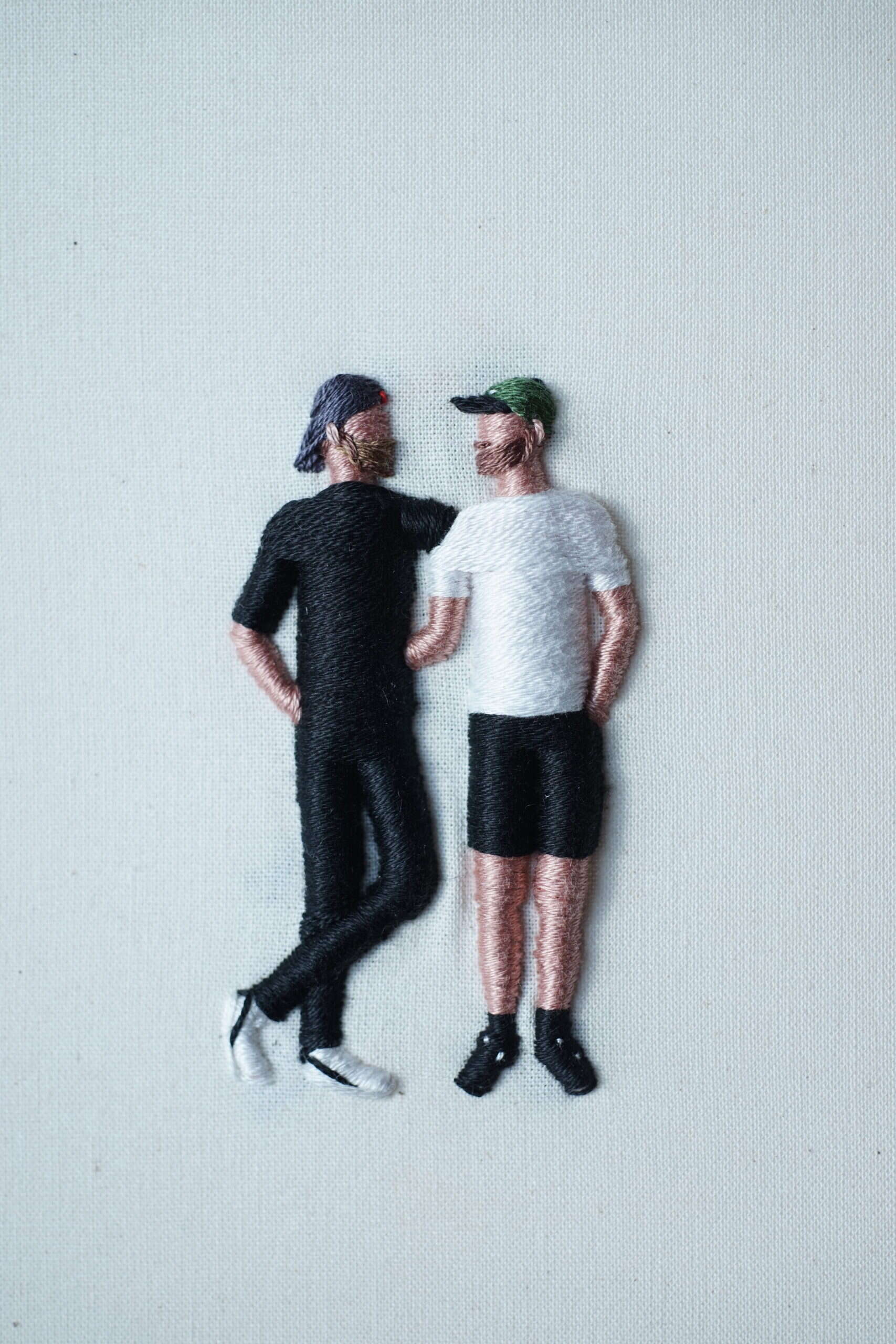
Before embroidery entered her daily life, Valentina worked primarily with installation. Lockdown stripped her of space, materials, and mobility. Therefore, she turned towards what she could hold in her hands. Armed with nothing more than fabric, thread, and a needle, she began embroidering images of what she missed most. These included people gathering freely, bodies resting together in nature, and communal joy unfolding on lawns and beaches.
This shift wasn’t just practical, it was deeply emotional. Through embroidery, Valentina found herself connected to centuries of women who had practiced this craft in domestic spaces, often invisibly. Consequently, the act of stitching became a form of companionship across time. It created a quiet dialogue with those who came before her. What might first appear soft or delicate quickly reveals itself as emotionally charged, historically aware, and quietly radical. This is proof that thread, when handled with intention, can carry centuries of meaning. It can still speak directly to the present.
What began as a lockdown practice has since traveled far beyond the domestic sphere. Valentina’s embroidery has reached global audiences through collaborations with Moschino for their Fall/Winter 2025 collection. Additionally, it featured on Netflix’s Wednesday.
Below, Valentina follows the thread back to where it all began. She shares how embroidery shifted from a lockdown companion to a lifelong language. She explains why sometimes the sharpest statements are made one stitch at a time.
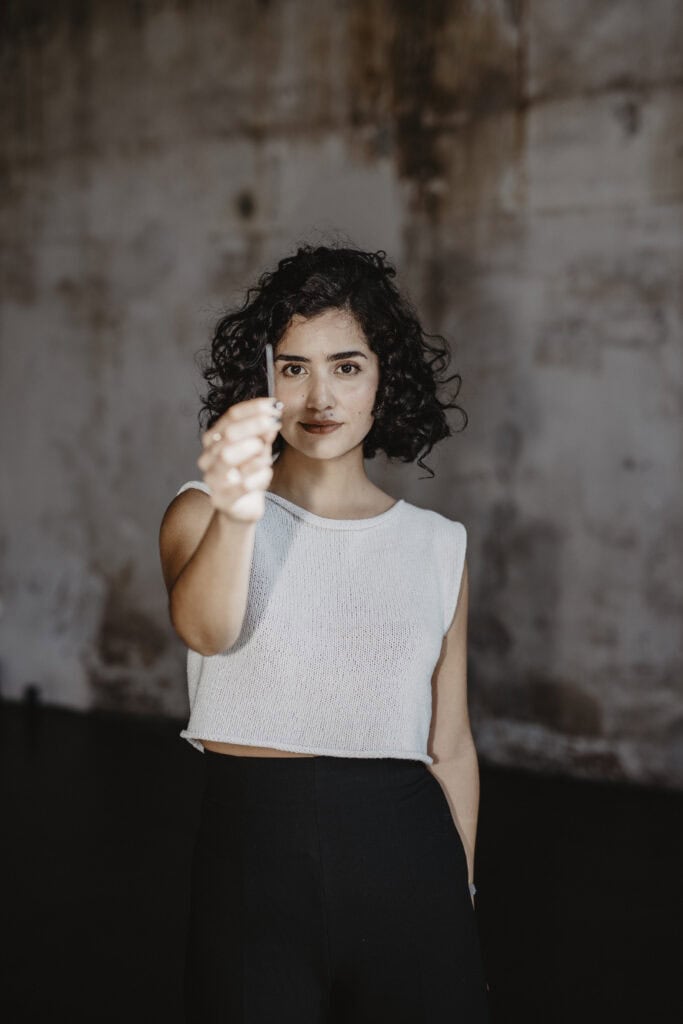
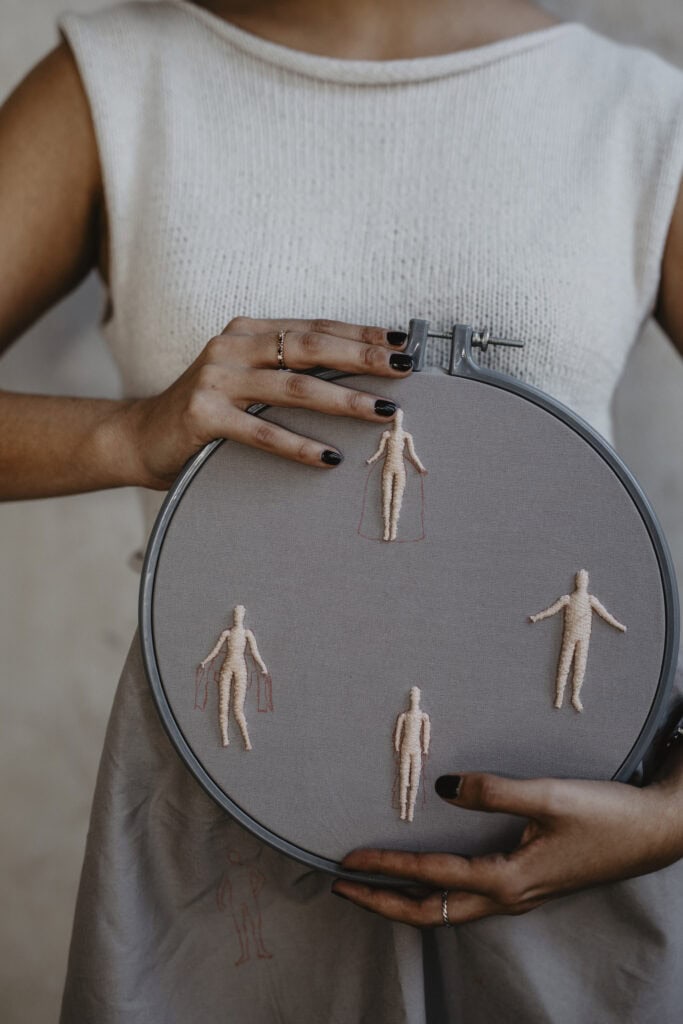
Valentina your shift into embroidery began during lockdown, when you started stitching the things you missed. At what moment did you realize that embroidery wasn’t just a technique for you, but a medium capable of carrying memory, longing, and narrative?
One of the best things about being an artist, from a contemporary perspective, is realizing that we don’t need to master a technique in order to create. We can approach any technique and begin creating honestly and humbly. Learning through time and practice, embracing the process and the mistakes as part of the artistic practice itself, is important. Embroidery is a great teacher for this: you can become obsessed with learning every stitch, seeking mastery of the craft. Alternatively, you can learn just one stitch and start playing, drawing with thread, parasiting any random piece of cloth until you find your favorite fabric.
I like embroidery because of its democratic accessibility: you only need a few very affordable items to start. You need thread, fabric, a hoop, and a single needle. You can work from home, on your way to work, anywhere. It is also an open-source knowledge, passed down by female embroiderers through history. It acts as a coded common language and a memory device.
All of this is not arbitrary; these are conditions that have allowed women and other underrepresented communities within the contemporary art realm to create. They have had access to a sustainable artistic practice. I believe there is great power in textile techniques.

Your work draws from both European and Andean textile traditions. How do you Valentina, navigate this dual heritage, and what kinds of conversations do you hope your embroidery sparks between these two histories?
I am fascinated by the idea that, at the dawn of civilization, different cultures that had never encountered each other developed the same techniques and technologies independently. This occurred despite them being separated by oceans. An example of this is loom weaving and hand embroidery: looms are as diverse as people are, yet they exist in every culture with infinite variations and purposes. They all fundamentally rely on warp and weft.
My greatest artistic reference is the embroidered figures on mantles from the Paracas culture (0–100 CE). At the same time, I have found in the antique European tradition of both embroidery and weaving, part of the tools for my contemporary textile practice.
As a Chilean artist trained in Chile and Scotland, and currently living in Germany, I value the opportunity to explore both traditions through my practice. I hope to spark conversations about how heritage and tradition can contribute to contemporary discourses, addressing everyday narratives.
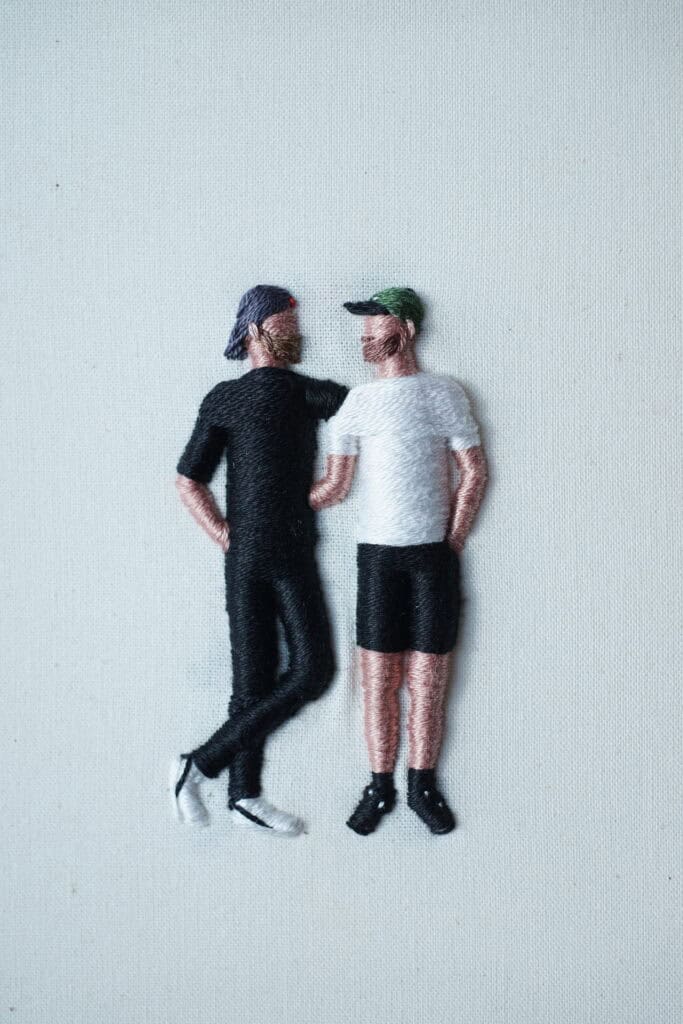
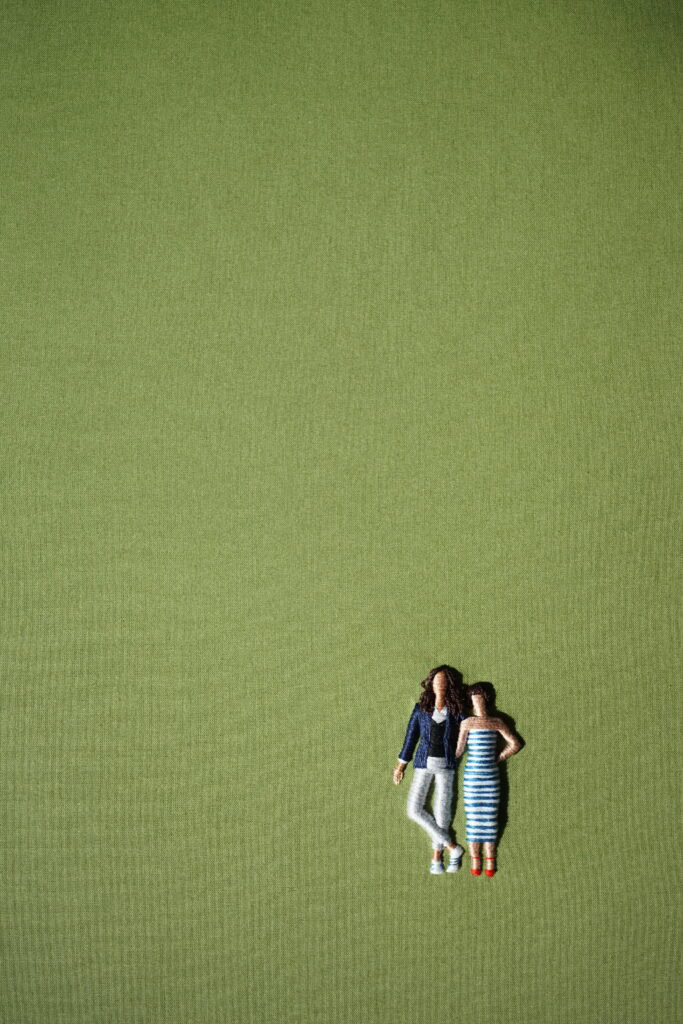
Much of your work invites physical contact. What role does tactility play in how you want people to experience your work?
I like how textile techniques rebel against the white-cube logic in contemporary art: isolated, off-limits, untouchable. Textiles were essentially created to cover us, as garments, as protection, and ornamentation: intrinsically bound to humans. We need each other as human contact gives textiles purpose.
Through my practice, I wanted to heighten that quality by including these little humans. Their sensuality reveals more in the idea of intimacy they project rather than the explicitness of their nudity. I like, however, that tension between materiality, subject, and intended purpose: cushions can serve many purposes, and my framed pieces are meant to inhabit corners and intimate spaces.
Your embroidery has reached new audiences through Netflix and Moschino. How has that influenced your thinking around visibility and storytelling?
I could never have imagined, when I was creating my first embroidered portraits, that I would have the opportunity to collaborate with a fashion house like Moschino or with Wednesday on Netflix. I believe they saw something in my practice that resonated with their own relationship to both textiles and craft.
It has been a gift to discover textile art through fashion design and tailoring. The idea of challenging tradition, the shared passion for detail, and the appreciation for things that take time are key elements. I see these experiences as exercises that connect me with broader audiences beyond the contemporary art realm. This outreach has always been one of my career goals.
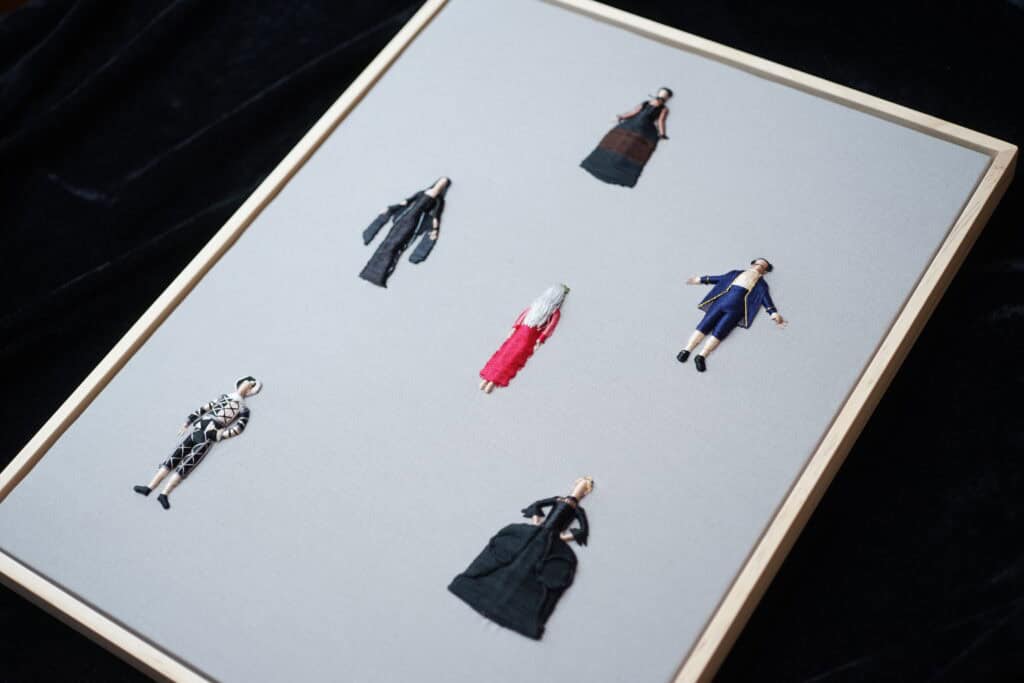
What directions are you excited to explore next?
My current project, which I owe all this public validation, is something I want to continue developing. I am portraying contemporary families and creating a visual archive of their diversity. I would like to see what happens beyond the traditional two-dimensional frame. Perhaps I will produce collective work in collaboration with emerging tailors and designers.
Crafts are meant to be transferred, and I want to explore the creative and community-making potential of that transfer. At the same time, I am considering residency programs to learn techniques firsthand, to remain always an apprentice.
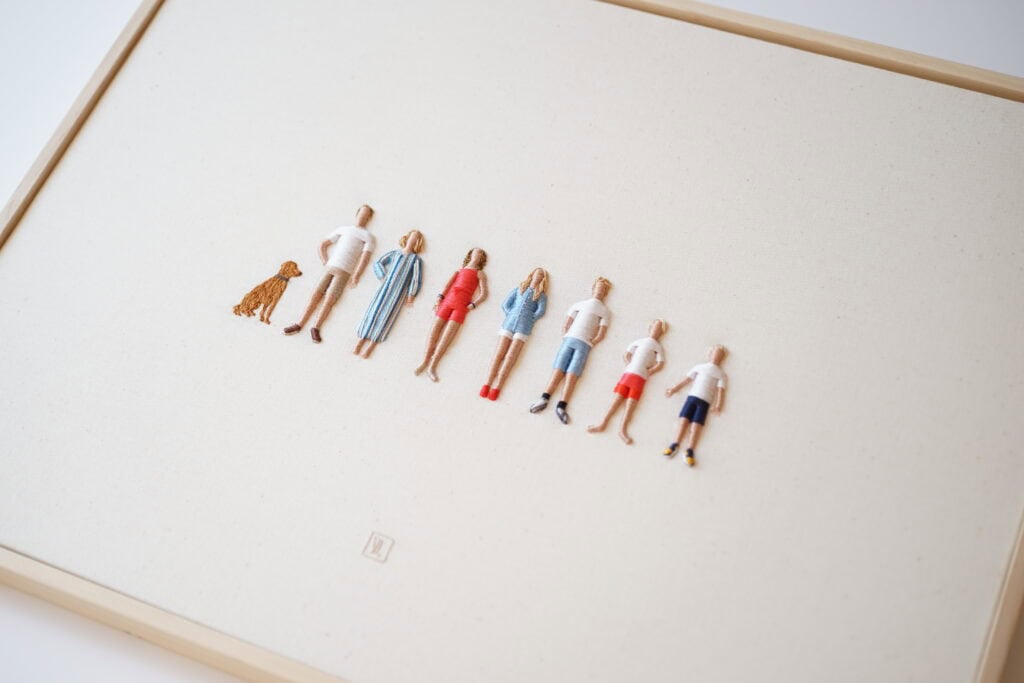
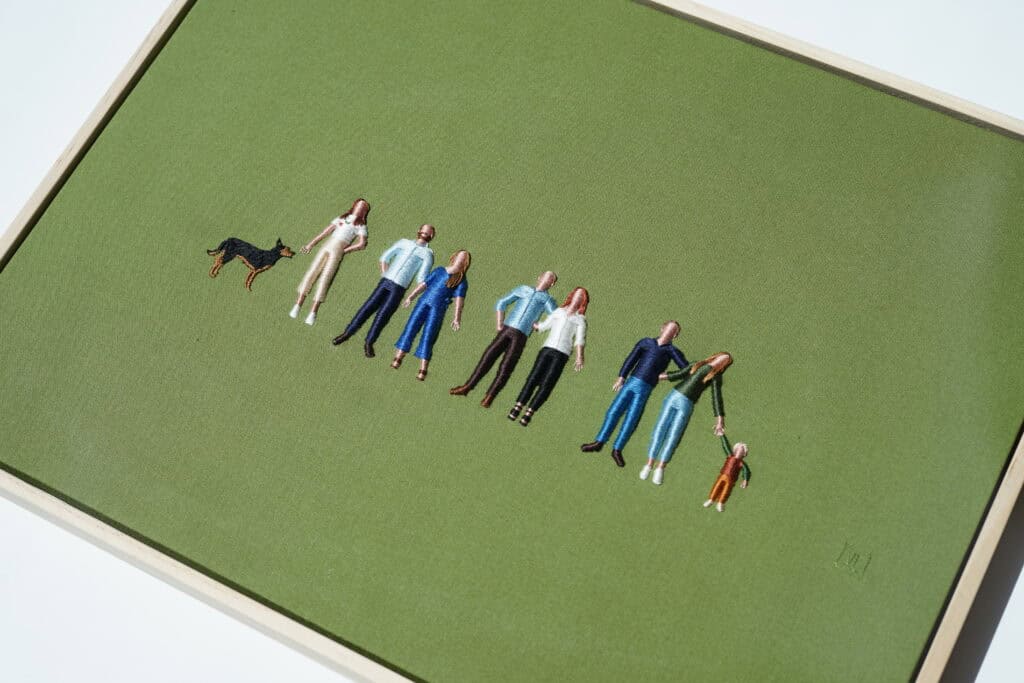
In the end, with a needle, some thread, and a very sharp sense of intention, Valentina Lobos is turning softness into strength and domestic gestures into cultural statements. Whether her stitches are hanging in galleries, sneaking into fashion collections, or cozying up in unexpected corners of everyday life, one thing is clear: embroidery is no longer background noise. In Valentina’s hands, it’s a language, a love letter, and occasionally a wink. Proof that the most powerful ideas sometimes just pull the thread and let the story unravel.
Share this post
Agnese La Spisa is an Italian creative based in Italy, specializing in publishing and fashion communication. At IRK Magazine, she brings together creativity, research, and design to shape stories with clarity and style. Curious and collaborative, she is driven by a passion for exploring culture, aesthetics, and the narratives that connect people, ideas, and disciplines.
Read Next